
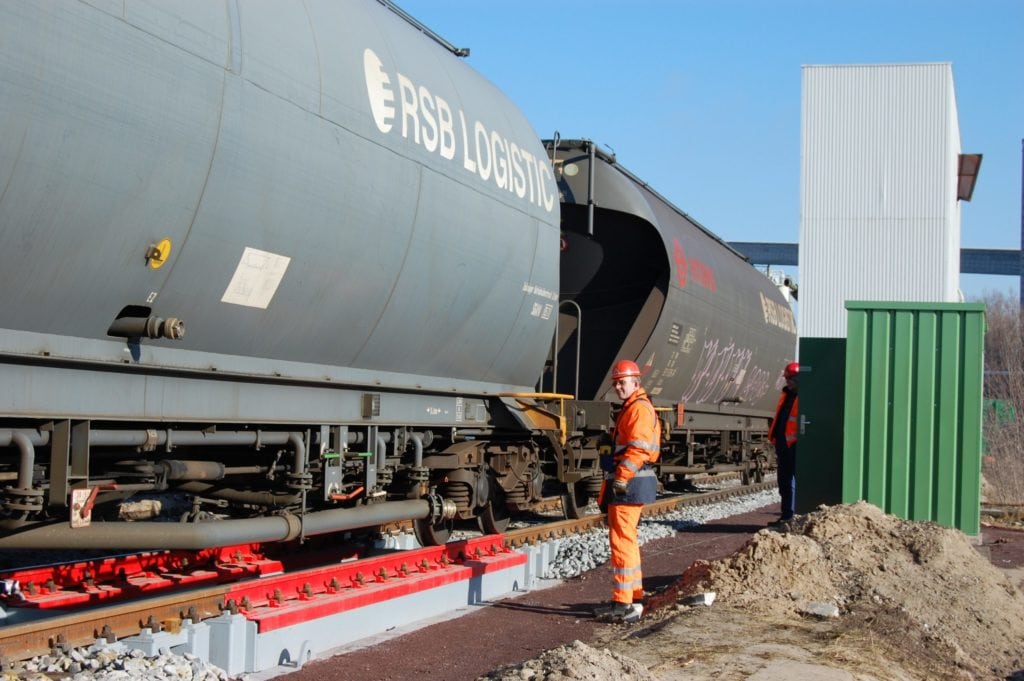
ESSMANN wagon damage detection
Visual damage detection for wagons
A railcar with a torn-open side wall isn’t always immediately noticeable. Neither is a dirty UIC number—until the railcar is missing from the weighing report. Our visual damage detection system scans every railcar as it passes by and automatically reports any deviations from the expected condition: open walls, holes, dents, bulges, crushed corners, graffiti, and illegible UIC numbers. You’ll receive the findings, including an image and timestamp, before the train has even left your yard.
Our technology makes it possible to detect potential damage and defects at an early stage, thereby significantly improving safety and efficiency in rail transportation. In conjunction with the UIC number recognition , it has proven itself in practice.
We tailor the implementation to the specific needs and preferences of our customers. Visual damage detection for railcars offers an efficient way to enhance safety and reliability in rail transport. By carefully considering these factors when implementing a visual damage detection system, damage can be detected and documented early on, making rail operations safer and more efficient.
Decision factors
Type of visual damage detection for wagons
Choosing the right visual damage detection technology depends on various factors. For example, different camera systems—such as line-scan and area-scan cameras—can be used. It can also be combined with our UIC number recognition is also possible. The selection should be based on the specific requirements and conditions of your rail operations.
Image quality and resolution
The image quality and resolution of cameras or other imaging devices are crucial for reliably detecting minor damage and defects. Higher resolutions can better capture dents, cracks, or signs of wear. Infrared capabilities enable detection even under adverse lighting conditions.
Lighting and ambient conditions
Lighting conditions and environmental factors significantly affect the ability to detect damage visually. The technology must be capable of functioning reliably both day and night, as well as under various weather conditions. The choice of location is crucial here.
Data processing and analysis
The captured images must be processed and analyzed efficiently to identify damage as accurately as possible through automation. Our software, featuring centralized, high-performance image processing, provides the foundation for reliable damage detection.
Integration into existing systems
Damage detection only delivers its full value when images and findings are delivered to where your staff are already working. We transfer the data to the weighing software and, via interfaces, to your higher-level rail, ERP, or maintenance system. In existing rail facilities, this integration has been operating productively for years using our EWP-GW software.
Cost-benefit analysis
What is the cost of overlooked damage? A railcar that isn’t noticed until it reaches the destination station blocks the track, delays the cargo, and disrupts scheduling. If the damage originated at your facility, you are responsible for it. If it originated during the inbound leg, you must be able to prove it. That’s exactly what photographic documentation is for: it shows the condition of each railcar at the time of handover.
Maintenance and training
Simple and regular maintenance of the camera systems and training for staff who work with visual damage detection are essential. This is the only way to ensure the system’s reliability and effectiveness. We offer comprehensive training for your team. Our maintenance contracts provide you with a high level of security and comprehensive services.
Scale builder tip: UIC number recognition
Combine railcar damage detection directly with our UIC number recognition. We developed this feature to enable direct railcar identification during dynamic weighing on our dynamic rail scales.

Nothing off the peg
To ensure reliable and fault-tolerant damage detection in railway operations, so many factors must be taken into account at the site that a flexible, customizable solution is essential. Talk to our experienced engineers and let them advise you on the requirements and possibilities.