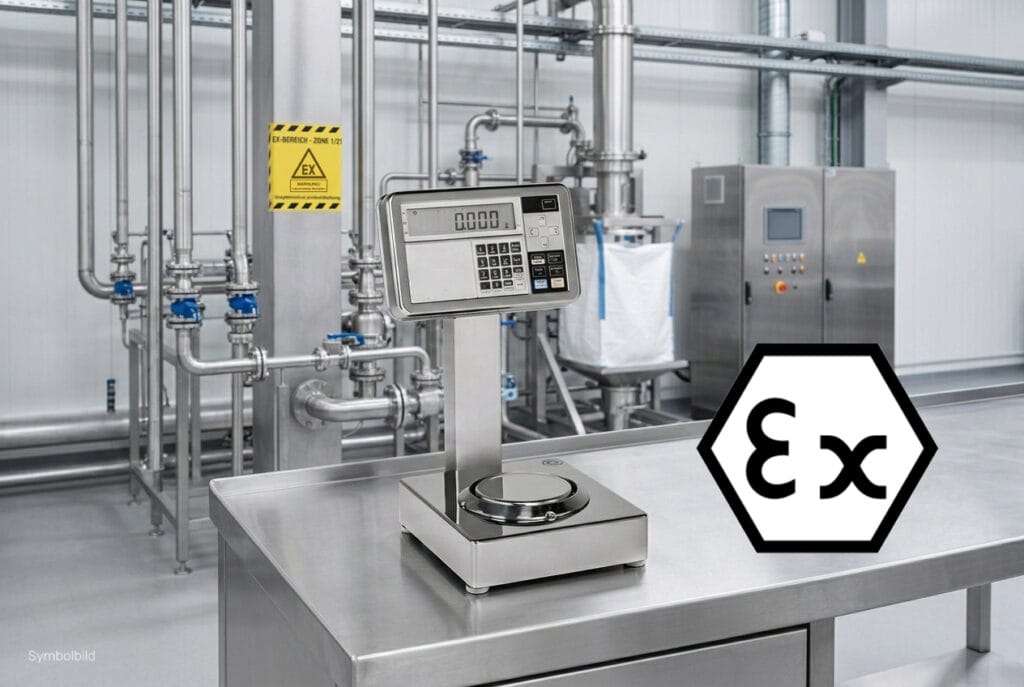
Explosive atmospheres often occur in industries such as chemicals, petrochemicals, food processing, milling, pharmaceuticals, paint production and recycling. Flammable gases, vapors, mists or dusts come into contact with air in a defined concentration range.
In such hazardous areas, electrical equipment can become a source of ignition, for example due to electrostatic discharge, sparking, hot surfaces or mechanically generated friction energy. For this reason, only appropriately certified explosion-proof scales may be used here: so-called scales with ATEX-compliant components and the appropriate device category/EPL for the zone or ATEX or explosion-protected scales for short.
Find out what makes an ATEX/Ex-protected scale special, which Ex zones and protection classes are relevant in practice – and what you should look out for when selecting and operating a certified Ex-protected scale or realistically evaluating Ex-protected scales as part of a price comparison.
What is an explosion-protected scale?
An explosion-proof scale is designed for areas in which an explosive atmosphere can occur, for example due to flammable gases, vapors/mist or dusts. The scale is designed and certified so that it does not represent an effective ignition source under defined conditions.
Important: “Ex-protected” is a normatively and legally regulated status. In Europe, this is based in particular on:
- ATEX Equipment Directive 2014/34/EU: Regulates the placing on the market of equipment and protective systems intended for use in potentially explosive atmospheres.
- ATEX Directive 1999/92/EC: Regulates minimum requirements for the safety and health protection of employees in hazardous areas (including zoning, organizational measures).
In Germany, appliance safety is implemented via the 11th ProdSV, among other things. For operators, this includes a documented risk assessment including zone classification and explosion protection document, plus a defined testing and maintenance concept.
ATEX, Ex zones and device categories: The basics that really count
Many decisions regarding an Ex scale do not depend on the weighing range, but on the environment: How often does an explosive atmosphere occur, and in what form? This is exactly where the Ex zones come from.
For orientation purposes, hazardous areas are typically categorized as follows:
- Gases/vapors/mist: Zone 0, 1, 2 (frequent to rare)
- Dusts: Zone 20, 21, 22 (frequent to rare)
The more critical the zone, the higher the requirements for the appliance (appliance category/protection level). In practice, this means that a scale that is approved for a more stringent zone can also be used in less stringent zones, provided the gas/dust group and temperature specifications are suitable – but not vice versa.
What makes explosion-proof scales technically special?
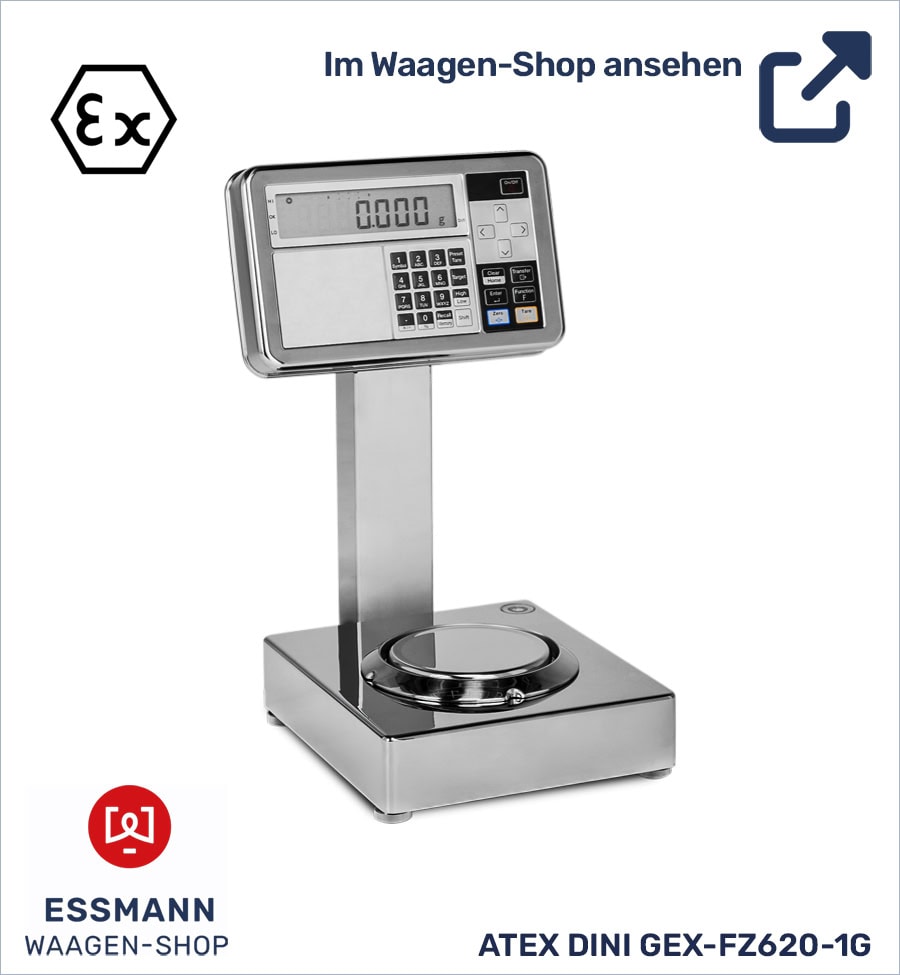
Explosion-protected scales are all about avoiding or encapsulating ignition sources; for electrical components as well as mechanical effects.
Typical features (depending on design, zone and type of protection) are
- Limited electrical energy (e.g. via intrinsically safe circuits) – so that no spark energy is generated that could ignite.
- Temperature management: Components are designed so that surface temperatures remain below possible ignition temperatures (temperature classes).
- Robust housing and sealing concepts: Dust and moisture ingress are reduced. Important because deposits and moisture are real ignition and fault risks.
- Antistatic & material selection: In dust-laden areas, electrostatic charge can become a relevant source of ignition. Suitable materials and a consistent earthing and equipotential bonding concept are therefore crucial.
- Separation of weighing platform and display/electronics: In many applications, sensitive electronics are located outside the hazardous area. Only the Ex-approved, “quiet” system remains at the weighing point.
Peripherals in hazardous areas: load cells, junction box, isolators and evaluation unit
With platform and hopper scales, explosion protection is rarely just a question of the load carrier. The complete signal path is crucial – from the Load cell via cables/feeds and, if necessary junction box (summing/junction box) to the evaluation unit.
Depending on the zone and concept, additional isolation stages are used (e.g. Zener barriers or galvanic isolators) to ensure that the electrical energy in the hazardous area remains limited. It is important to note that all components in the Ex zone must match the required device category/EPL – and the combination must be documented.
Explosion protection explained: Playlist with 7 dust and gas explosions
Practical demonstrations and accident examples show how quickly dust or solvent vapor can turn into a serious incident – and why explosion protection must always be considered as an overall concept. We have put together seven short videos playlist in which you can clearly see how dust and gas explosions can occur. Even on the birthday cake!
ATEX marking: device group, category/EPL, zone, medium – What you can read in the marking
In everyday life, it is crucial to read the label correctly. Depending on the appliance, nameplates may include the following:
- Equipment group, e.g. group I = mining/pits, group II = all other areas (industry above ground)
- Category/protection level (e.g. 1/2/3 or EPL)
- Medium: G (gas) or D (dust)
- Type of protection (e.g. Ex i for intrinsic safety, Ex d flameproof enclosure, depending on the product)
- Temperature class or maximum surface temperature: For gases, temperature classes (T1-T6) are often used; for dusts, the maximum permissible surface temperature in °C is used.
In addition, you will often encounter IP protection types (e.g. for high-pressure cleaning or dusty processes). In practice, IP protection types are often just as important as ATEX, because tightness, cleanability and dust ingress have a massive impact on availability.
Where are explosion-protected scales used?
Ex scales are relevant wherever substances are processed, mixed, filled or stored and where flammable atmospheres can arise. This affects more industries than you might think at first glance.
Typical areas of application for explosion-protected scales:
- Chemicals & petrochemicals: Dosing, filling, tank/container weighing for solvents and flammable liquids.
- Pharma & Life Science: Weighing of active ingredients and excipients (often with strict documentation and cleaning requirements).
- Lacquers/paints/adhesives: solvent vapors, mixing processes, IBC/drum weighing.
- Food & Agriculture: Dust Ex (e.g. flour, sugar, starch), weighing of ingredients, big bag handling.
- Plastic and chemical granulates: dust and abrasion content, bag and silo feeding.
- Recycling & disposal: Fine dusts, changing material mixtures, incoming goods and checkweighing.
Ex scales are a building block here to ensure throughput, quality and auditability without explosion protection becoming an obstacle in the process.
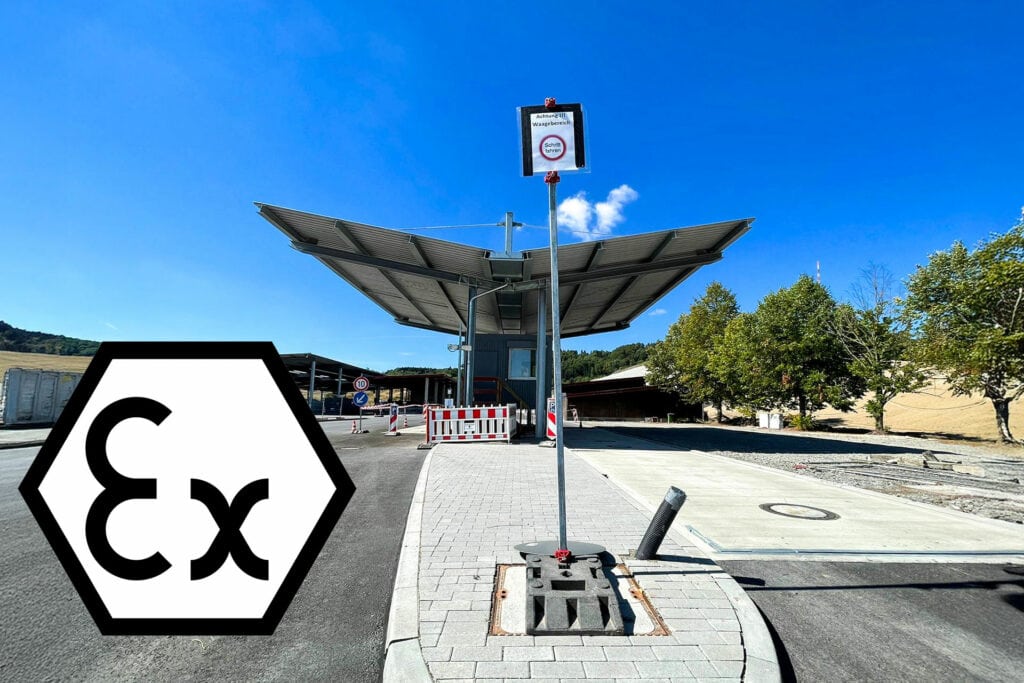
Explosion-proof laboratory scales: when precision meets explosion protection
An explosion-protected laboratory scale is a special case: high resolution, stable repeatability and often sensitive samples meet requirements for avoiding ignition sources. They are typically used in laboratories or pilot plants where flammable solvents, vapors or dusts may occur.
What is particularly important here:
- Installation location & zone: Laboratory environments often have clearly defined areas. The correct zone classification determines the selection.
- Usability: gloves, cleaning processes, logging. All of this influences suitability for everyday use.
- Interfaces & data flow: Anyone who has to document (e.g. batches) needs a clean, compliant connection, ideally without Ex risks due to adapter solutions.
Buying explosion protection scales: Which questions should be clarified before the offer
When companies buy an explosion-protected scale, this often happens under time pressure: audit, conversion, new raw material or changed process. To avoid purchasing errors, it is worth taking a quick, structured look.
Before you start comparing prices, clarify at least:
- Which zone (gas/dust) and which appliance category is required?
- Which weighing task is it really? (checkweighing, dosing, filling, formulation, incoming goods)
- What are the environmental conditions? (cleaning, humidity, corrosion, temperature, dust exposure)
- How is the scale integrated into the process? (display in hazardous area or outside, interfaces, software)
- Are there requirements for calibratability / legally relevant weighing?
Price comparison of explosion protection scales: Why cheap can be expensive
A clean Price comparison for explosion protection scalesn should not only compare acquisition costs. Ex technology is a system consisting of scales, peripherals, documentation and service.
The total costs typically include:
- Scope of certification and documentation (suitable for the zone)
- Installation/commissioning costs (incl. cable routing, barriers, display/platform separation if necessary)
- Training/instruction for operators
- Maintenance, calibration and, if necessary, calibration/test concept
- Spare parts and downtime strategy (downtime costs are often particularly expensive in hazardous areas)
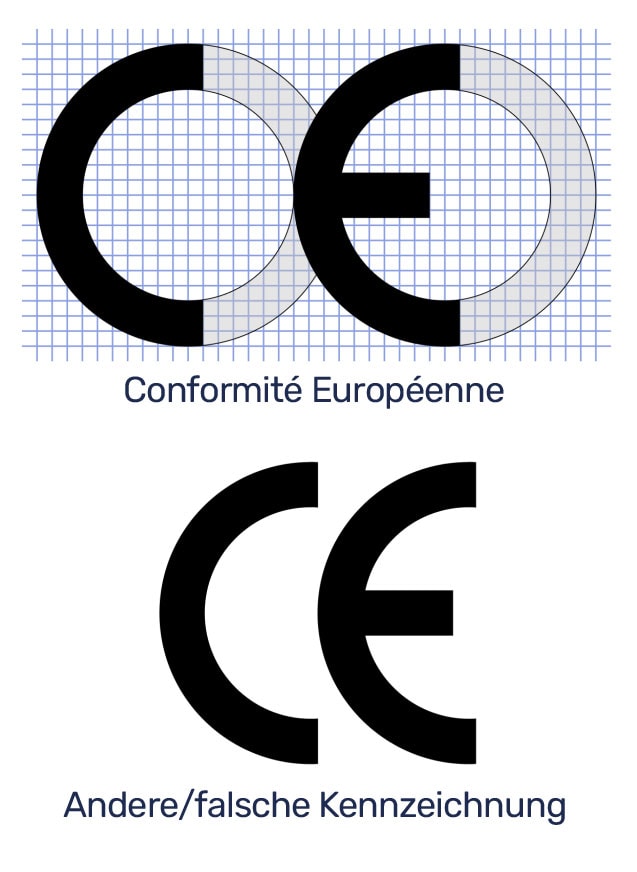
Anyone who saves money here and uses supposedly cheaper appliances is also putting lives at risk: Undefined CE markings on imported appliances of unclear origin outside the EU, for example, are easy to confuse with our European CE marking , which is a visible sign that a product complies with the applicable European directives and regulations. However, similar markings are also frequently found on non-compliant devices, without an officially known definition. The similarity to the European CE marking is presumably no coincidence – and can lead to fatal errors when purchasing, which can have far-reaching consequences. You should therefore always consult trustworthy experts, especially when it comes to such sensitive purchasing issues.
Who can operate an Ex scale?
Ex scales are built for everyday use, not just for specialists. They can usually be operated:
- Production employees (filling, dosing, control)
- Laboratory staff (samples, formulations)
- Logistics/goods receipt (checkweighing and loading)
The decisive factor is not so much who organizes the hazardous area, but how the company does so: Instruction, clear responsibilities, suitable cleaning and maintenance routines and the avoidance of improvised conversions (e.g. additional cables, non-approved display devices).
Maintenance, calibration, service: Why Ex scales become a risk without support
Explosion protection depends on the system remaining in a defined state. That is why regular testing, maintenance and calibration are not just “nice to have”, but a real contribution to safety and measurement quality.
As a weighing specialist with All-round scale service ESSMANN supports the selection and provision of ATEX-compliant scale components (load carriers, Ex load cells, Ex evaluation unit, required peripherals such as isolators) including the associated manufacturer and conformity documentation. The basis for this is the zone classification, risk assessment and the explosion protection document by the operator and his designated expert.
Short checklist: Does the scale really fit into your ex-process?
If you want to quickly check internally whether the concept is coherent, a few simple guiding questions will help. They do not replace a risk assessment, but ensure that you have the right topics on the table early on in the project.
- Does the ATEX marking match the zone (gas/dust) and the appliance category?
- Are peripheral components (e.g. junction box explosion-protected scales, cables, cable glands) also Ex-compliant?
- Is it clear where the display/electronics are located (in the hazardous area or outside)?
- Are the cleaning, humidity and dust suitable for the IP protection class and material?
- Is there a concept for calibration, maintenance, documentation and spare parts?
FAQ: Frequently asked questions about explosion-proof scales
What does “certified explosion-protected scale” actually mean?
That the device has been tested in accordance with the relevant specifications for use in hazardous areas and has the appropriate labeling and documentation, tailored to the zone, medium (gas/dust) and device protection.
Is ATEX the same as IP protection?
No. ATEX refers to explosion protection (ignition source prevention/control). IP refers to the ingress of dust/water. In practice, many applications require both.
Can I retrofit a standard scale to be “explosion-proof”?
Generally not advisable – because Ex conformity is a combination of design, components, testing and marking. Otherwise, a safety and liability problem may arise.
Who is an independent supplier of ATEX scales in Germany?
In the Scales store from ESSMANN | Scales & Automation you will find hand-picked brand manufacturers for explosion-protected scales that you can select to suit your defined requirements. The customer chat will help you immediately and personally with your selection.
For scale construction projects in explosion-protected areas, contact our scale construction experts, who can explain everything about ATEX truck scales and ATEX rail scales.
Ex scales are process safety
Explosion-proof scales combine two goals that belong together in operation: Safety and measurement quality. Planning the zone, marking, peripherals (incl. junction box) and service concept properly from the outset prevents improvisation later on – and keeps processes stable.
If you want to buy an explosion-protected scale or have an existing solution tested, it is worth taking a look at the overall system: design, installation, documentation and long-term support.
Explosion protection is a matter for experts
Would you like to select a certified explosion-protected scale for your application or set up your existing explosion-protected weighing system in an audit-proof and low-maintenance manner? As a weighing specialist with All-round scale service supports ESSMANN | Waagen in the selection, implementation and ongoing support – from the Explosion-proof laboratory balance about ex-protected truck scales up to the robust ATEX track scales-solution.
The featured image was created with the support of KI.