
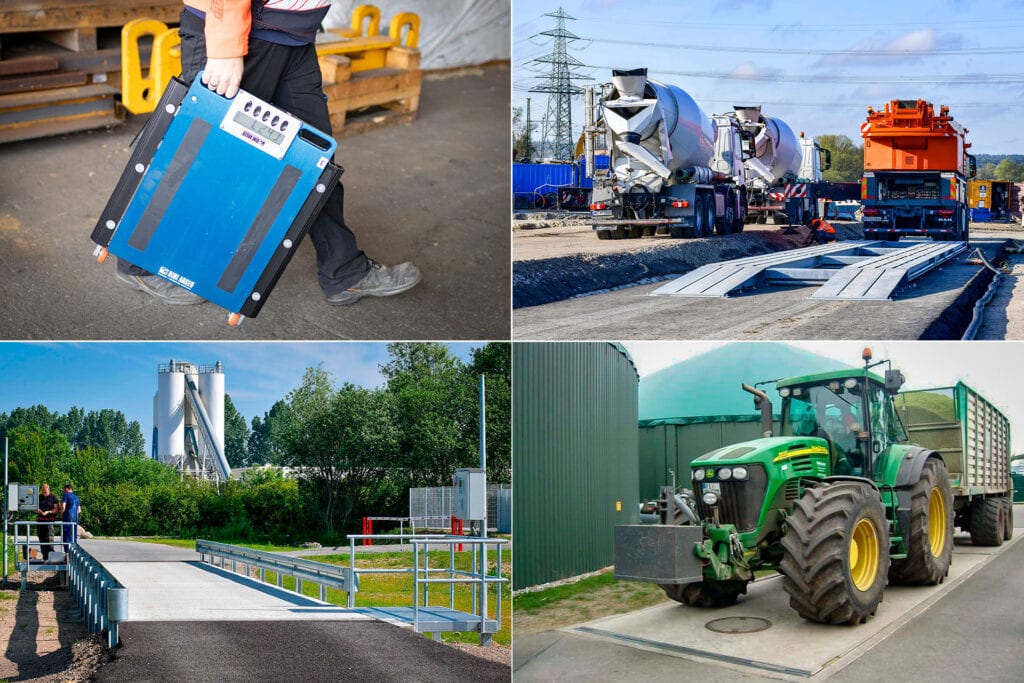
Anyone who weighs vehicles rarely just wants an approximate weight. In most cases, it is a question of billable data, audit security, throughput and ensuring that the scales still work even when it is dusty or freezing outside or when a wheel loader is maneuvering next to them. This is precisely why it is worth taking a clear look at the different types of truck scales: mobile truck scales, mobile truck scales, axle load scales or wheel load scales and the classic concrete truck scales as above-ground or underfloor versions.
This article takes a practical look at the differences – including the question of why a cheap motorhome scale for consumers can be helpful for vacation trips, but is not the right choice for professional applications.
1. brief overview: The four types of truck scales
There are many models on the market – but in essence it almost always comes down to these four types:
- Mobile weighbridge (truck scale) – e.g. ESSMANN mobile truck scale HE-TSTruck drives completely onto a modular bridge.
- Mobile axle load scales or wheel load scales (weighing pads) – e.g. Dini Argeo WWSAxles or wheels are weighed on individual platforms, from which the total weight is calculated.
- Concrete above-ground scales – e.g. ESSMANN HE-ÜWSPrecast concrete parts, above ground, robust for continuous operation.
- Concrete underfloor scale – e.g. ESSMANN HE-SFKflush with the floor, space-saving and “drive-over”.
The differences lie less in a differentiation of better or worse, but depend on your conditions: Mandatory calibration, location (temporary vs. permanent), traffic flow, surface, cleaning and weather loads, and whether you need to operate many lane widths per vehicle.
2. mobile professional truck scales: when the location is not fixed
Mobile systems are strong when you need to weigh temporarily for days, weeks or months, but do not (yet) want to or cannot build a fixed scale. Typical scenarios:
- Construction sites (excavation, asphalt, bulk materials, temporary work yards)
- Recycling center / waste disposal company with conversion measures or seasonal peaks
- Agriculture (harvest, liquid manure/forage logistics) when changing areas
- Highly mobile applications on parking lots, company access roads or in industrial parks
2.1 Dini Argeo axle load scales and wheel load scales: weighing pads for maximum mobility
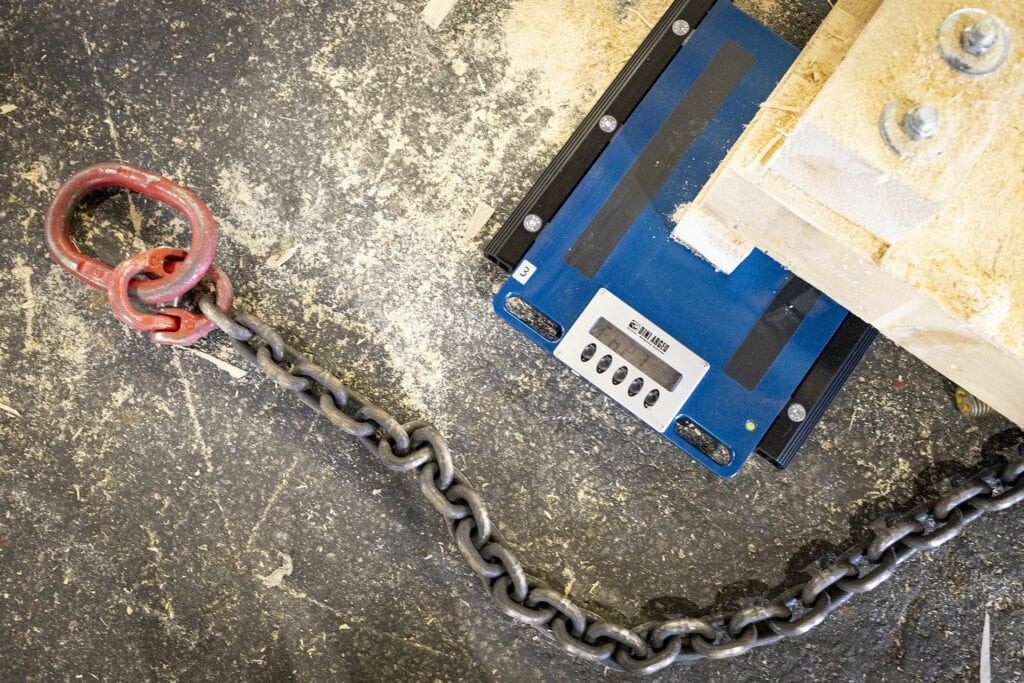
Dini Argeo offers with the WWS–series Portable platforms with which axle loads or wheel loads are weighed. The total weight is calculated from the results of each platform. The manufacturer emphasizes the key benefits of quick set-up in just a few minutes and suitability for vehicles regardless of the number of axles. Also for other loads such as boxes and machines the case scale with the weighing pads is perfectly suited.
Why axle load and wheel load scales are so popular in the field
- Extremely portable – small, individual pads instead of a whole bridge
- Ideal when access routes are narrow or no bridge length is available
- Very good for control and plausibility considerations, e.g. in the event of overloading risk or for authorities
- Can be brought to the load if it is to be moved only slightly, such as transport crates with sensitive machines
Important in the selection process: In practice, axle load and wheel load systems are always a question of the process. They often weigh axle by axle or wheel by wheel – this can be slower than a weighbridge when throughput is high, but is logistically more flexible.
2.2 ESSMANN HE-TS: Mobile weighbridge for temporary use
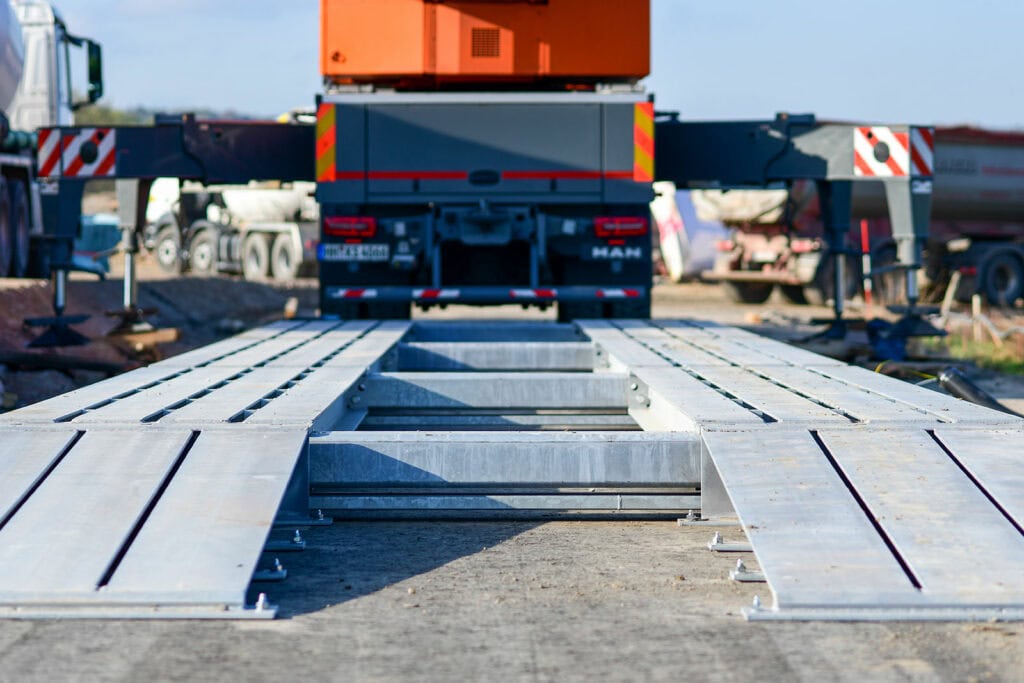
The ESSMANN HE-TS is designed as a mobile truck scale (truck-mounted scale) and is based on a modular system consisting of a weighing module, bridge module and ramp module. The idea behind it: compact to transport, quick to set up, variable in length – and yet designed to work reliably in professional environments.
Where it fits particularly well
- If you want to weigh trucks, tractors or heavy vehicles completely, not “axle by axle”.
- If you need a mobile truck scale that can be adapted to changing lengths/loads.
- If you work in harsh environments where “camping hardware” simply won’t hold up.
Practical note: Mobile weighbridges benefit from a stable, load-bearing surface, for example asphalt, concrete or paving. This is a prerequisite for reproducible results and for the service life of the mechanical components.
2.3 What else is relevant in practice
What else needs to be considered when using mobile weighing systems
- Fast operational readiness: Portable truck scale systems sometimes only have installation times of a few hours, but then the surface must also be perfect.
- Operation on “any stable surface ” – this message is no substitute for checking whether the surface really is sufficiently stable and level. This is particularly important for repeated loads.
For you as a scale operator, this means that if “mobile” doesn’t just mean “I can drive it away”, but “I can operate it in a reproducible and resilient manner”, it’s worth taking a look:
- Substrate requirements, ramp/approach protection, cleaning
- Protection of load cells and cables/radio connections
- Process integration (printout, data export, software)
- Verifiability and verification (if relevant for billing)
3. why inexpensive motorhome scales should not be confused with professional vehicle scales
When searching for terms such as “motorhome scales” or “vehicle scales price”, many procurement managers and employees quickly end up with consumer products: compact wheel scales for caravans and motorhomes.
Such devices can be useful in the leisure sector – for example, to check loads or to avoid rolling due to incorrect load distribution. Manufacturers and dealers usually specify wheel loads of up to approx. 1,500 kg per wheel, splash-proof designs and, in some cases, deviations in the percentage range, as well as the need for the ground to be as level as possible.
Where the problem lies in professional use
- Load range and design: End user wheel scales are not designed for truck/semitrailer axles.
- Robustness: Construction site dust, sharp-edged bulk materials, frost/de-icing salt and forklift traffic are a different world to that of the Sonnenschein camper vans.
- Reproducibility: If a system explicitly requires a very flat surface and yet only provides approximate values, this is critical for process and billing purposes.
- Verification and billing capability: In the case of commercial weighing, the question of whether the scales must be operated in a verifiable/verifiable manner is often decisive – “leisure scales” are not designed for this.
Note: A cheap motorhome scale is a loading tool – not a mobile truck scale.
4. when concrete scales make more sense than mobile scales
Mobile systems are strong when you need to be flexible. Concrete truck scales are strong when you need continuous operation and high throughput, and when the location is fixed.
4.1 Overhead scales (concrete), e.g. ESSMANN HE-ÜWS: Robust for demanding environments
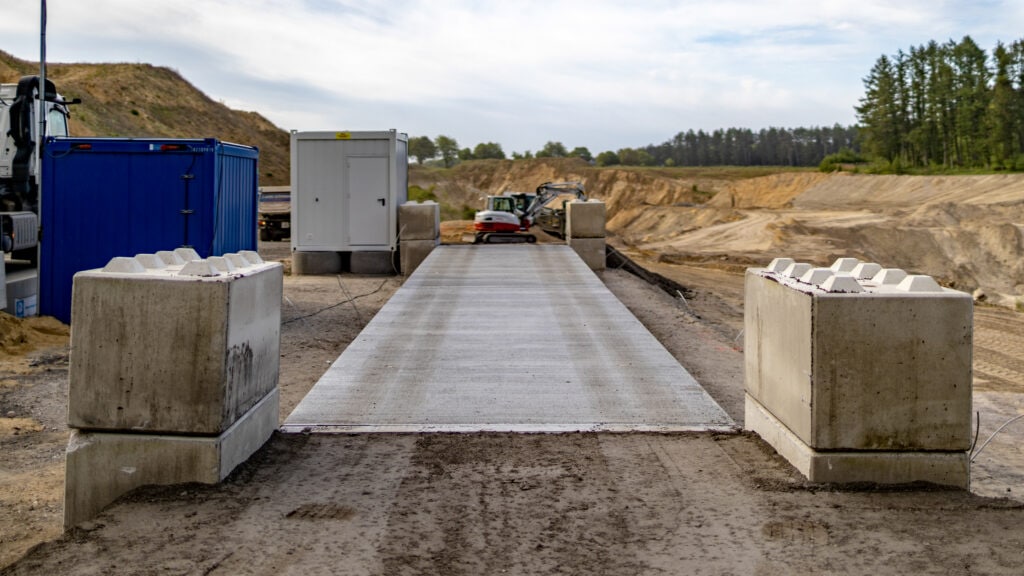
The ESSMANN HE-ÜWS is an above-ground weighbridge made of precast concrete components, i.e. bridge and foundation. ESSMANN describes it as a system that meets the relevant DIN standards and is based on PTB specifications and OIML recommendations.
Typical reasons why operators in recycling yards or bulk goods logistics use concrete above-ground scales
- High throughput: Many weighings per day require robustness
- Dirt and cleaning reality: coarse soiling is often easier to handle with above-floor concepts than with complex mobile setups
- Long-term stability: concrete bridges are designed for decades of operation
- Comfort & safety: defined driveways, clear traffic routing
The mix of robustness and availability often counts, especially in the use case of truck scales at the recycling yard or gravel works: if the scales fail, it is not uncommon for operations to come to a standstill.
4.2 Underfloor scales, e.g. ESSMANN HE-SFK: Space, traffic flow and drive-over capability
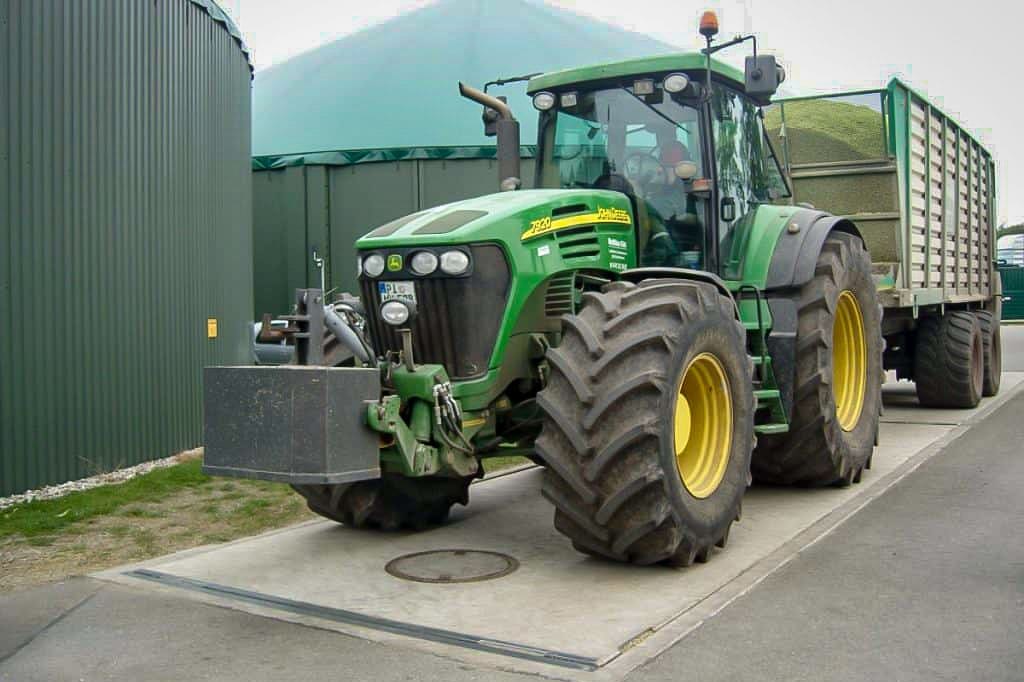
Underfloor concepts are useful if you need a scale flush with the floor – e.g. due to limited space, maneuvering traffic or because areas also have to be driven over crosswise.
The ESSMANN HE-SFK is operated as a fully underground truck scale for legal-for-trade applications (accuracy class III according to 2014/31/EU (MID) or DIN EN 45501). In addition, the concrete bridge can be driven over lengthwise and crosswise and is resistant to frost and de-icing salt. Thanks to the integrated base plate, the factory pre-assembly and the optional design in accordance with WHG or ATEX, the robust truck scale is optimally designed for demanding areas of application, even with transverse loads that can be driven over.
Typical applications
- Logistics and industrial yards with narrow traffic areas
- Locations where vehicles do not just drive straight over the scales
- Areas where an above-ground scale would be in the way (due to heights, ramps, forklift traffic)
5. decision-making aid: Which scale suits which requirement?
A good selection decision for the purchase of a truck scale starts with three questions:
- Do I have to invoice or document in a legally compliant manner? (mandatory calibration / audit)
- Is the location temporary or permanent?
- What does my traffic flow look like? (throughput, shunting, different vehicle types)
When a mobile scale is the better choice
- You need a mobile truck scale for a temporary project (construction site, conversion, seasonal peak).
- Their location changes (e.g. mobile tractor scales in an agricultural environment).
- You want to be able to act quickly without having to build a foundation immediately.
Typical choice:
- Mobile weighbridge (HE-TS)if vehicles are to be weighed “in one piece”.
- Axle load/wheel load pads (Dini Argeo)when maximum transportability and flexible installation locations are paramount.
When a concrete scale is the better choice
- They weigh daily (or several times a day) and require robust continuous operation.
- The location is set for the long term (recycling yard, gravel works, industry, municipal yards).
- They want clear, safe traffic routing and the shortest possible weighing times.
Typical choice:
- Above ground (HE-ÜWS) for robust, easily accessible installations.
- Underfloor (HE-SFK)when surface area, passability and traffic flow are the guard rails.
6. checklist for procurement: from requirements to the right solution
Price comparisons are understandable – but when it comes to truck scales, “price” is often worthless without context. You should consider these points before request clarify:
- Application scenario: stationary vs. mobile, indoor/outdoor, dirt, frost/de-icing salt
- Vehicle types: Truck, articulated truck, tractor, number of axles, track widths
- Throughput: weighings/day, queues, handling time
- Legal framework: Billing by weight? Then: Verifiability and regular calibration
- IT/process: weighing data, interfaces, printing, ERP/weighing software
- ServiceWho ensures availability – Spare parts, Maintenance, Response times?
The last point in particular is underestimated: ESSMANN is a specialist weighing company and offers fast and reliable Scales service and Calibrations and Calibrations – This is often just as important in operation as the scales themselves, because downtime costs money directly.
FAQ
Are all mobile truck scales automatically verifiable?
No. There are mobile systems that are designed to be calibratable – and others that are intended more for control and plausibility measurements. For professional applications, you should clarify this first.
Is a motorhome scale sufficient for occasional truck inspections?
Generally not. Motorhome/caravan scales are designed for other load ranges and usage situations; they are used more for load control in a leisure context.
What does a truck scale cost?
The weighbridge price depends heavily on the type of construction (mobile vs. concrete), bridge length, maximum load, foundation, peripherals (traffic lights, barriers, cameras, terminals) and service/calibration packages. It makes sense to clarify your requirements using the checklist above – then the price question becomes a reliable investment calculation. As a first rough guide: The platform scale from Dini Argeo is currently available in the smallest axle load version up to 3 or 6 tons with cables for 2,976.70 euros in the Scales store. The mobile truck scales ESSMANN HE-TS starts in the 6-meter version at 25,880 euros net. One Concrete underfloor scale SFK starts at around 49,500 euros net.
The mobile scales can also be ordered from ESSMANN as rental scales can also be rented.
Do you have any further questions?
When you select a mobile truck scale or a stationary truck scale, it is not only the technology that is decisive, but also the feasibility in operation: underground, traffic flow, billing, data, and the question of how quickly you can be up and running again when servicing is required.
ESSMANN unterstützt dabei als Waagenfachbetrieb mit Beratung, Lieferung/Montage, Service sowie Kalibrierung und Eichungen – damit aus einer Waage ein verlässlicher Prozessbaustein wird. Weitere Fragen beantworten wir in unseren großen FAQ Fahrzeugwaagen – oder persönlich: