
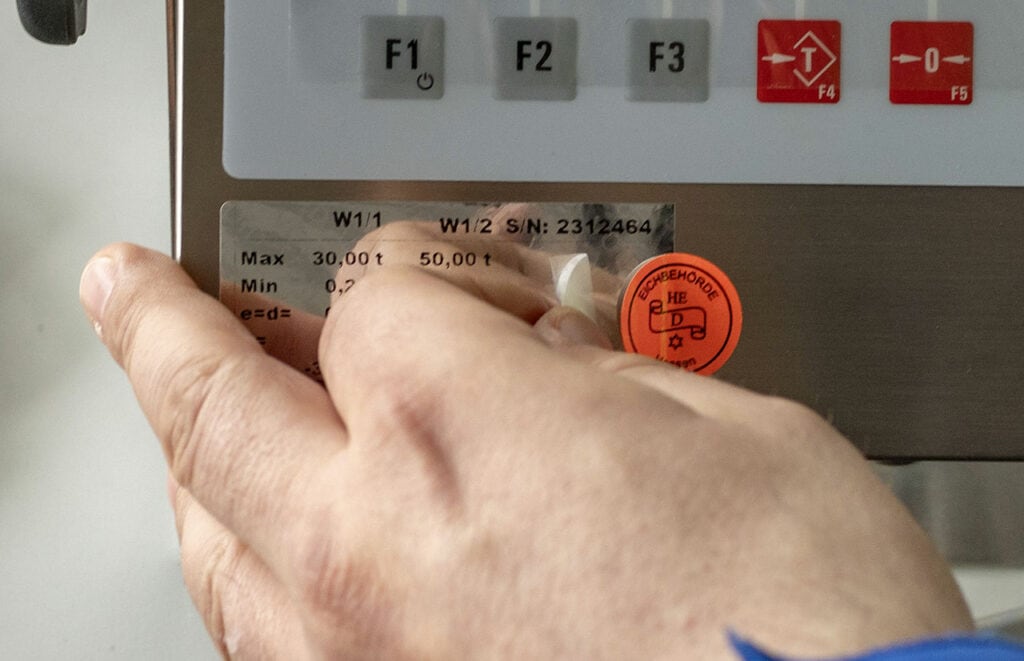
New measurement and calibration fees have been in force since 01.01.2026. The rates were adjusted nationwide with the “Second Ordinance Amending the Ordinance on Measurement and Verification Fees (MessEGebV)”. The date of the service is decisive: Calibrations and inspections from 01.01.2026 are charged according to the new fee schedule.
Important for operators: The fees do not increase the same for every item, but they do increase noticeably in many areas. It is therefore worth planning dates and technology in advance to reduce testing costs and downtimes. We give you an overview of changes and options.
Legal basis and responsibility
The MessEGebV stipulates the amounts to be charged for calibration services on a nationwide basis. Calibration is carried out by the competent state authorities. Differences therefore arise less in the rates than in the organization on site (access, preparation, time window, provision of aids).
1. truck scales: the savings potential of unloading
For non-automatic weighing instruments of classes III/IIII, the fee is based on the maximum load (Max). Anyone who remains permanently below a threshold can switch to a more favorable fee level by means of professional unloading.
Example calculation: unloading 60t to 42t
One company uses a 60 t weighbridge, but only weighs vehicles up to 40 t in real terms.
| Posts | 50/60 t scales(previously) | 50/60 t scales (since 01.01.2026) | 42 t scales (since 01.01.2026) | Savings |
|---|---|---|---|---|
| Calibration fee | 999,90 € | 1.313,90 € | 992,60 € | 321,30 € |
| Calibration certificate | plus. | plus. | plus. | |
| Additional fees | plus. | / | / |
Practical note: The technical conversion (unloading, documentation, signs) often pays for itself quickly, especially with regular recalibration.
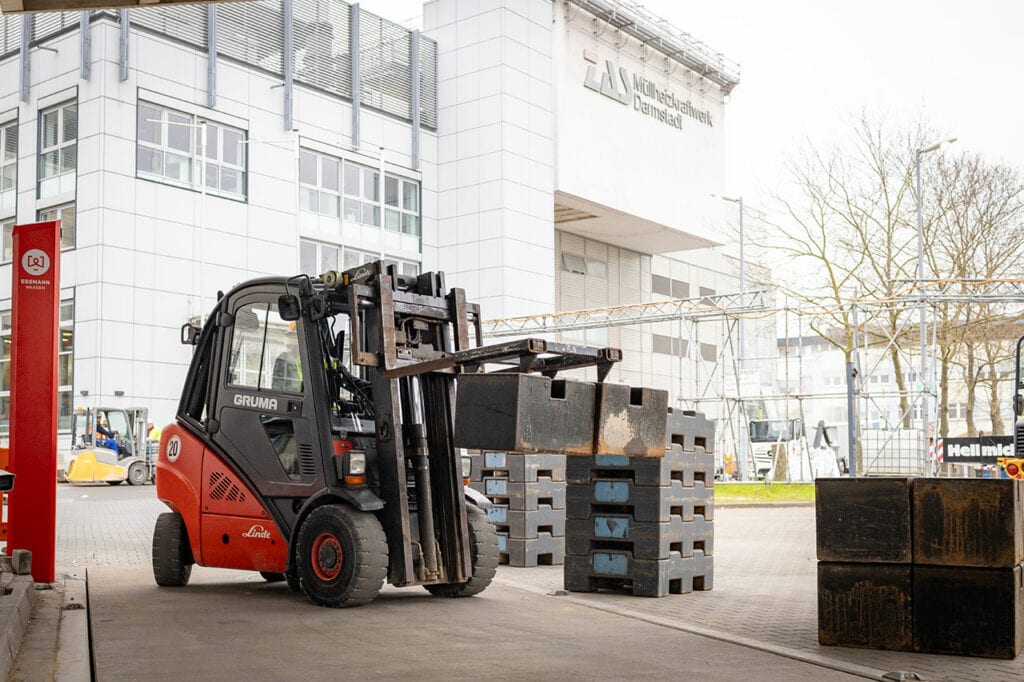
The discharge procedure: obligations and limits
- Who is allowed to do this? manufacturer or an authorized scale specialist such as ESSMANN.
- Documentation: Adapt configuration, update type plate, specify correctly in the calibration application.
- Check demand seriously: Derive a reliable load profile from the last 24 months (e.g. 95th percentile).
- Legal consequence: After unloading, the scales are no longer permitted for higher loads in commercial transactions.
2. dynamic track scales: eliminate time wasters
Automatic track scales are billed “at cost” in the fee schedule. Any delay therefore directly increases the costs.
Typical time drivers:
- Missing track clearance / coordination with signal box
- Safety briefing only on arrival
- No shunting capacity for test weighing
Recommendation: Plan an exclusive time slot (e.g. 4-6 hours) without regular operation. A shunter on standby is often cheaper than additional billing time.
3. silo and container systems: reducing complexity
In systems with several weighing devices or terminals, the testing effort increases quickly. Check in advance:
- Which displays/terminals actually generate measured values that are subject to calibration?
- Which lines/modules are still active and which are old stock in the software?
A brief configuration check before the set-up date reduces queries, conversions and downtime.
4. retail scales: clarify calibration obligation, bundle deadlines
Scales whose results determine prices (sales/billing) are subject to verification. Pure checkweighers may not be subject to legal metrology if they are clearly not used for commercial transactions.
Efficiency tip: Use the usual calibration periods (often two years, with exceptions) and bundle store appointments into predictable windows – this reduces coordination and downtime.
5. reductions through work aid and preparation
The fee schedule provides for reductions if expert work assistance and suitable test equipment are provided (e.g. lifting gear, personnel, prepared scales). Early consultation with the responsible body is crucial: What is recognized, what must be documented?
Summary
The fee adjustment from 2026 will mainly affect those areas where the maximum weight is set too high or where time is lost on site. Those who use load profiles, design technology appropriately (unloading), bundle deadlines and prepare properly can often significantly reduce the additional costs – and the processes at the same time.
Planning for calibration with unloading
Would you like to have your truck scales weighed? Ask via our appointment form and indicate whether you would like to have your scales verified. We will prepare everything you need four weeks before the verification so that everything is ready and legally documented on the day of verification. Of course, we will also organize the verification for you and accompany you on the day of the verification to ensure that everything goes smoothly and quickly.

Official sources & helpful links for further reading
Legal basis in the Federal Law Gazette: BGBl. 2025 I No. 321 (“Zweite Verordnung zur Änderung der Mess- und Eichgebührenverordnung”).
List of fees / Annex to the MessEGebVOfficial text of the law incl. schedule of fees on “Laws on the Internet”.
Calibration periods & operator obligations (AGME): Compact official overview of the use of legal-for-trade measuring instruments.
Background/reasoning from the Ministry: BMWE page on the proposed regulation (classification, objective, documents).
Information from the respective calibration authorities on the changeover (effective date 01.01.2026):