
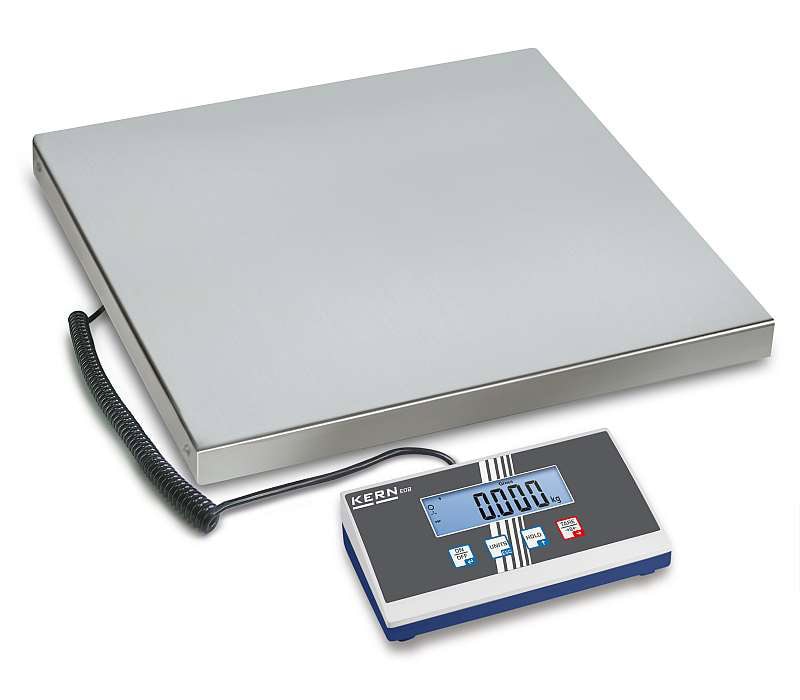
Whether spare parts, merchandise or general cargo: in shipping and logistics, the correct weight determines costs, process efficiency and customer satisfaction. Even small deviations can lead to incorrect freight rates, recalculations or delays. This is exactly where the parcel scale shows its strength. It is not an accessory, but a central tool in the daily shipping business.
This article shows what makes a parcel scale, what types are available – and what you should really look out for when choosing one.
1. what is a parcel scale and what is it used for?
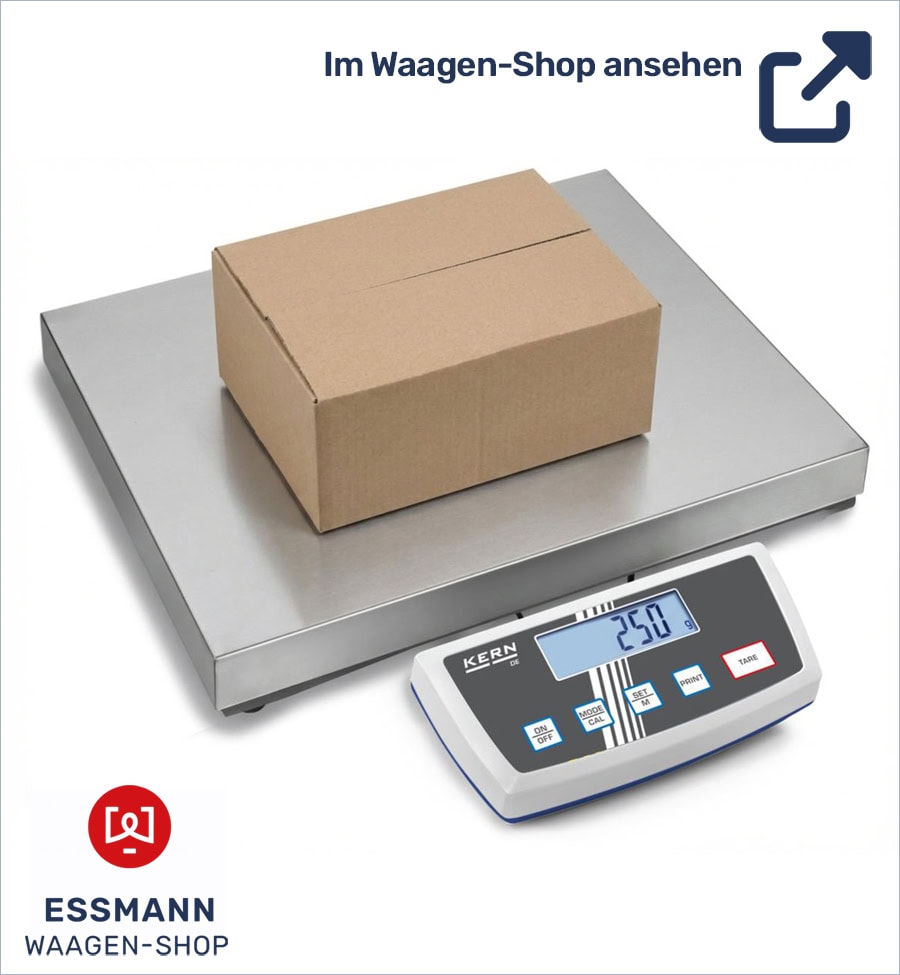
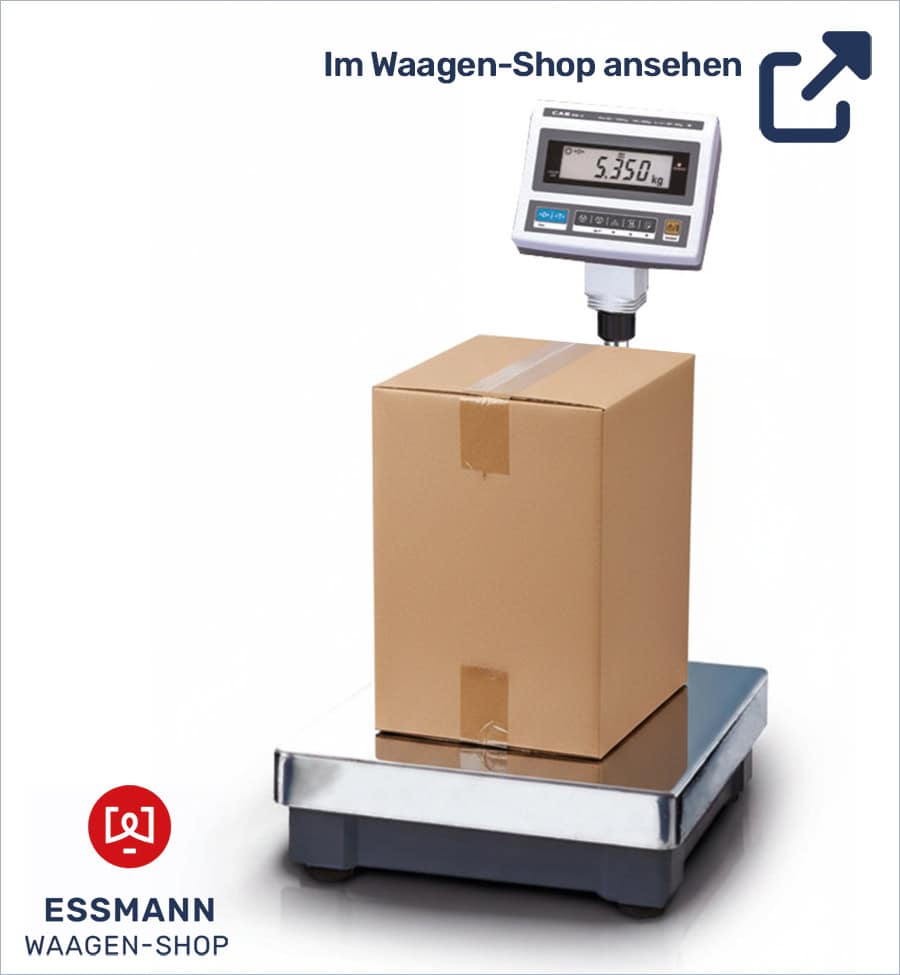
A parcel scale is a special platform scale for precisely determining the weight of parcels and shipping goods. They are used wherever goods are regularly shipped: in industry and retail, logistics centers, shipping departments, post offices or in e-commerce.
Depending on the version, it works mechanically, electronically or computerized, stationary or mobile, with a simple display or direct system connection.
2 What types of parcel scales are there?
Parcel scales differ mainly in terms of design, technology and area of application:
Mechanical parcel scales
- Cost-effective, simple, mobile
- Suitable for occasional weighing
- Lower accuracy, no interfaces
Electronic (digital) parcel scales
- Standard in professional use
- High accuracy, fast stabilization
- Often with data memory and interfaces (e.g. RS232, USB)
Computerized parcel scales
- for high shipping volumes
- Integration in ERP, WMS or shipping software
- Functions such as automatic tariffing, data transmission, remote diagnosis
The higher the throughput and process integration, the more worthwhile the technically more sophisticated solution.
3. the price range for parcel scales – is the expensive purchase worth it?
The price range for parcel scales is wide:
from under 100 euros for simple entry-level models to several thousand euros for networked professional systems.
The decisive factor is not the price, but the fit with your requirements:
- How heavy are the typical packages?
- What is the shipping volume per day?
- Is the scale used manually or integrated into the system?
- Is a high number of cycles required?
A solid mid-range model is often sufficient for occasional shipments. For intensive, continuous use, however, a robust, fast and integrable parcel scale quickly pays off.
4. choosing the right parcel scale
Before you buy a parcel scale for shipping, you should first consider what maximum load(heaviest parcel) and platform size (usual parcel size) you need.
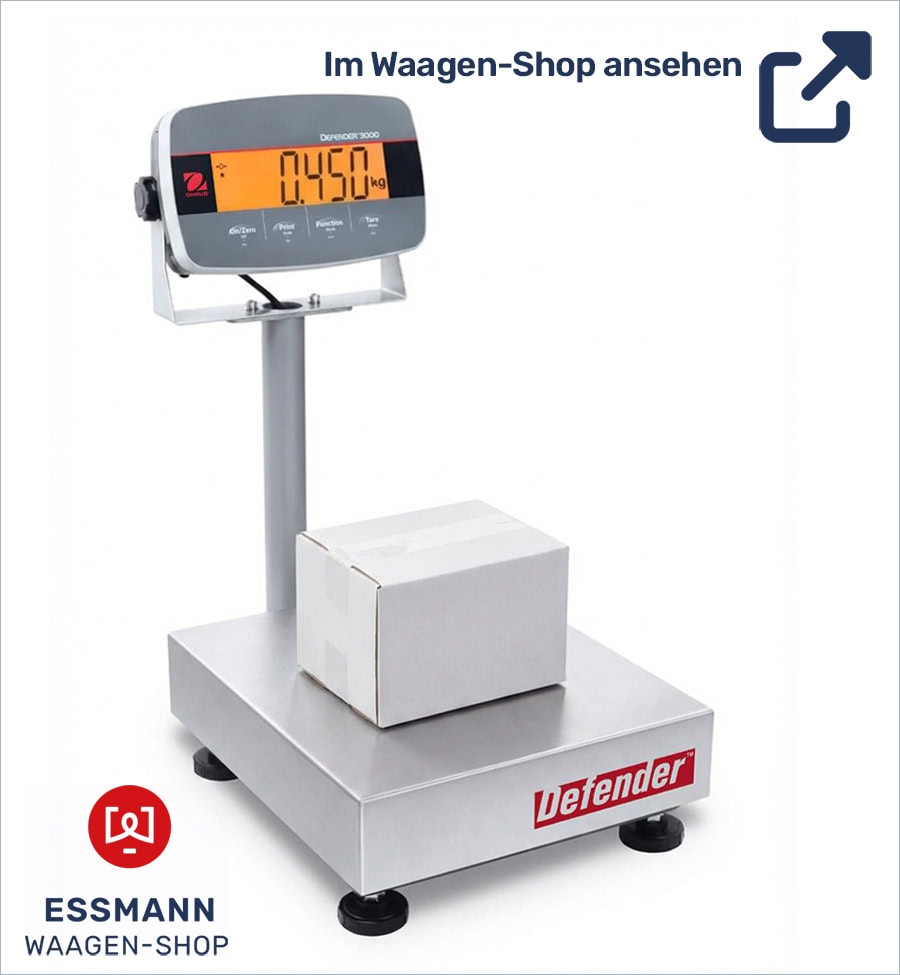
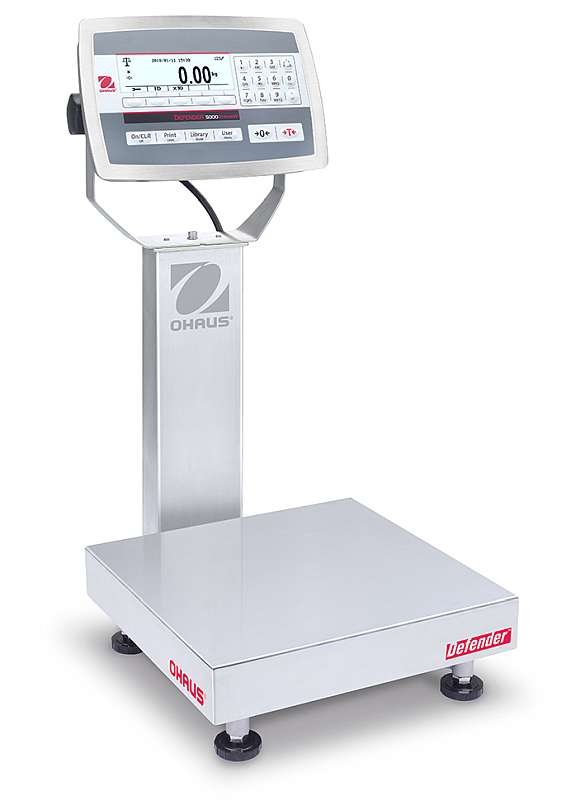
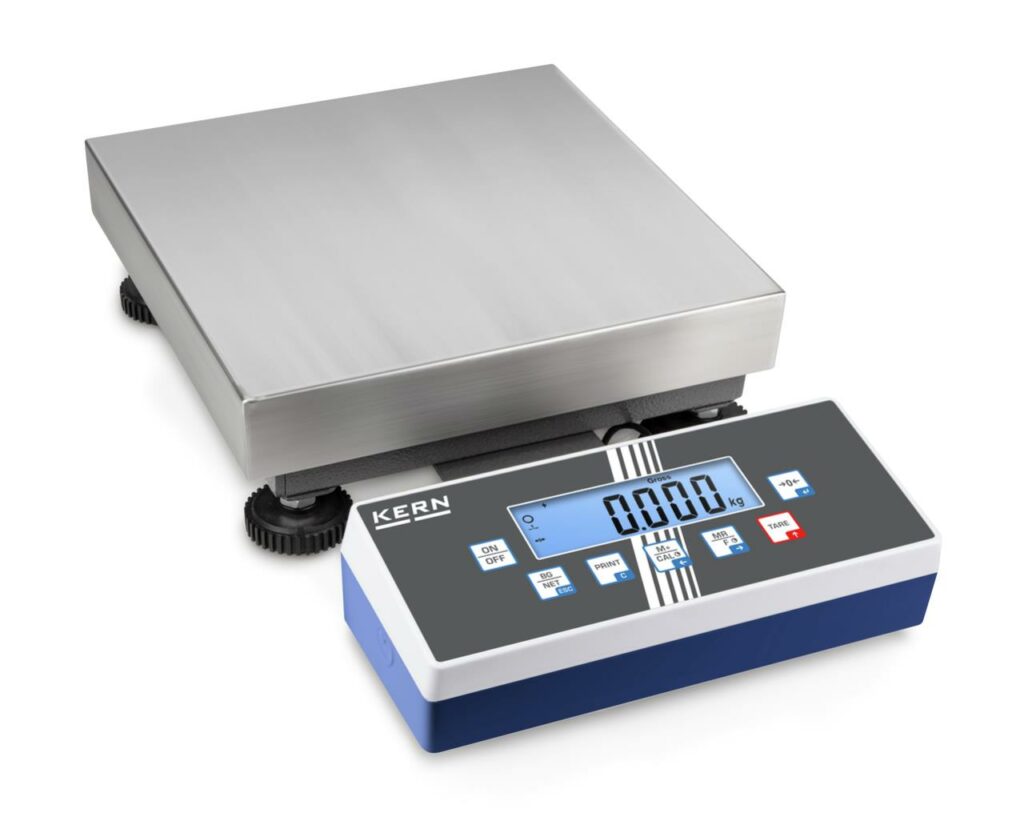
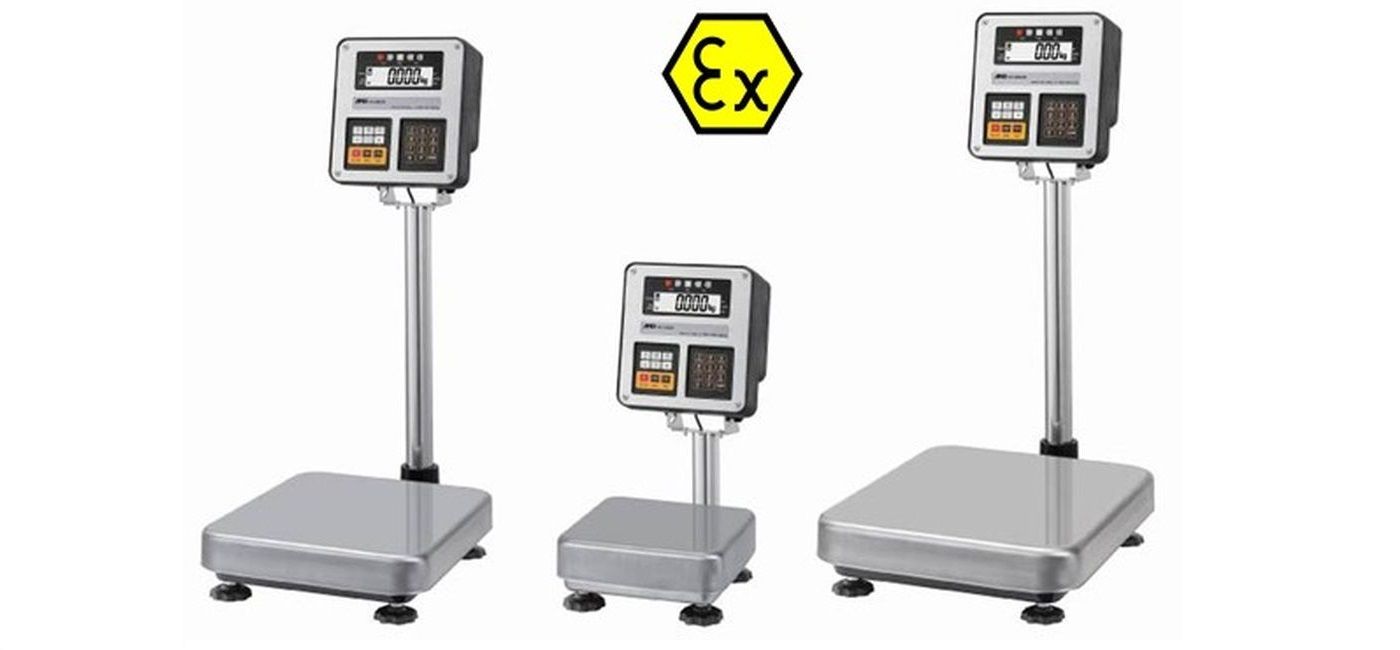
If you want to use the scales very intensively, it is worth investing more money in a solid model. The A&D FG-KBM, KERN EOE 10K-3 or Ohaus Defender 3000 for example, are very robust and have a short stabilization/settling time, which means they are more productive.
These scales are also available as calibrated versions: the A&D FG-KBM-EC and Ohaus Defender 3000-M. If you are looking for a flexible display unit with cable, you will find it at the Ohaus Catapult 5000 (with detachable spiral cable).
If you are looking for a scale that has both a large weighing surface and a low maximum load for light but bulky parcels, we recommend the Ohaus Catapult 5000 with 900x600mm weighing surface. Many of our parcel scales have standard or optional RS232, USB or RJ45 Ethernet interfaces for transferring the weight to your computer.
Important selection criteria at a glance
Before you decide on a parcel scale, you should clarify the following points:
Load capacity and platform size
The scale should easily cover both the heaviest parcel and the typical dimensions.
Speed and productivity
Short settling and stabilization times increase throughput – an often underestimated factor in day-to-day business.
Interfaces and integration
RS232, USB or Ethernet enable direct connection to a PC, shipping software or ERP systems.
Calibratability
As soon as the weight is relevant for invoicing (e.g. for shipping costs), a calibrated parcel scale is required by law.
Ergonomics and installation
Easy-to-read displays, remote display devices or flexible cable solutions make daily work easier.
5. practical tips for reliable operation
- Regularly calibrate and maintained to ensure permanently accurate results
- Comply with load capacity limits to prevent damage
- Use the correct weight units, especially for international shipping
- Select scales to suit the workstation and process – not the other way around
6. conclusion parcel scale
The parcel scale is a decisive factor in shipping. It ensures transparency, efficiency and cost security. The following applies:
Not the most expensive solution is automatically the best – but the one that suits your company in terms of technology, ergonomics and processes.
If you know your requirements and make a targeted selection, you are not just investing in a scale, but in a stable, future-proof shipping process.
Related products in this article
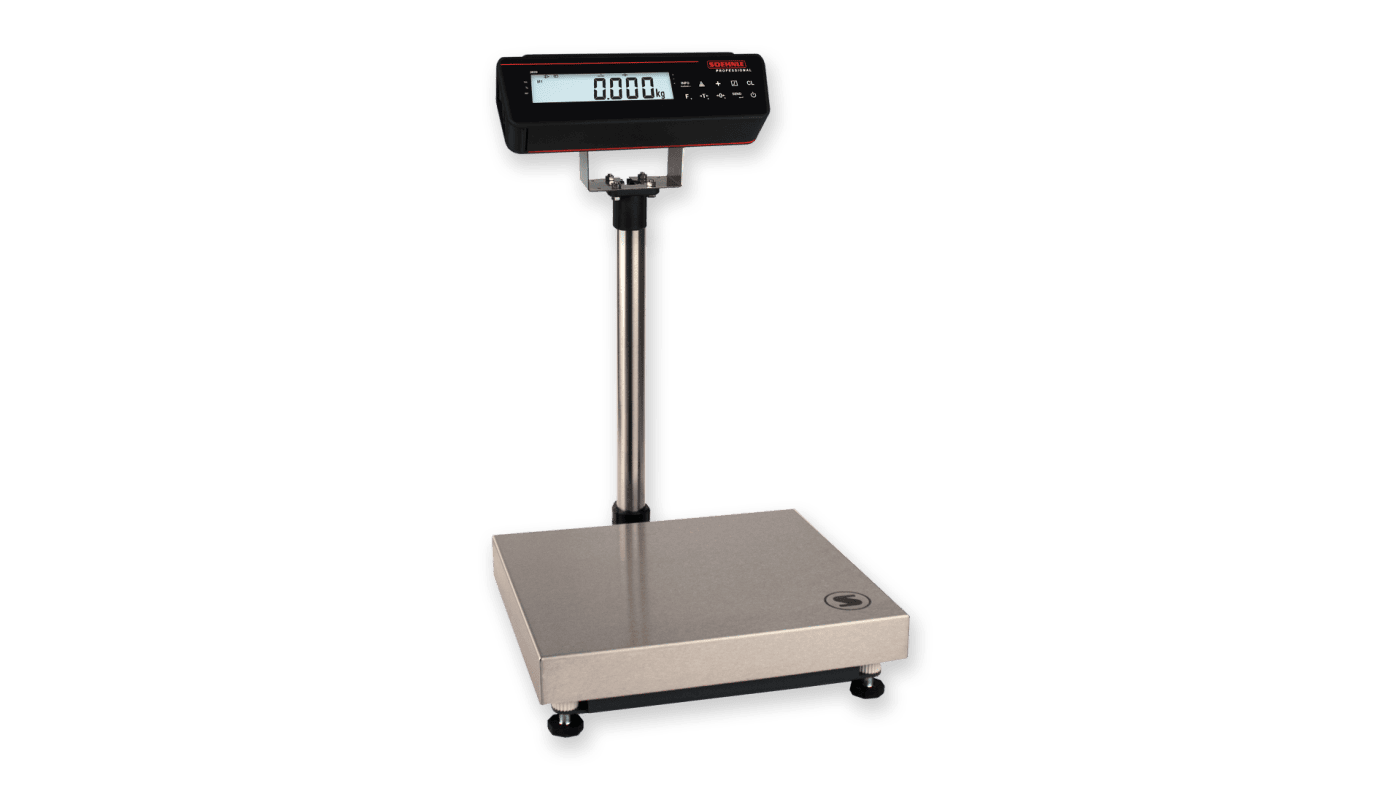
Verified platform scale Soehnle 7973.16.120 – Maximum load 150 kg – Readability 10 g – Weighing surface 660 x 550 mm – Stainless steel
Find out more in the ESSMANN scale store
Find out more in the ESSMANN scale store
Find out more in the ESSMANN scales store