Mome scales weigh pallets, others weigh trucks – and then there are scales where even a draught of air can become a measuring problem. Precision scales are among the most accurate tools in weighing technology: they are used wherever small masses need to be determined reliably, reproducibly and with documentation security – in the laboratory, in pharmacies, in quality assurance, in the precious metals trade or in the production of sensitive formulations. The term sounds simple and familiar. However, it is only technically correct if it is clearly defined.
The exact definition: What exactly is a precision scale?
In technical terms, the term precision scale refers to a scale of accuracy class I (formerly: verification class) for non-automatic weighing instruments. This classification is defined in the European Directive 2014/31/EU on non-automatic weighing instruments. It distinguishes between four accuracy classes:
- Class I – Precision scales
- Class II – Precision scales
- Class III – Commercial scales
- Class IIII – Coarse scales
The following applies to Class I: The maximum calibration value e is 0.001 g, the minimum load is 100 e and the balance must have at least 50,000 calibration values . The international recommendation OIML R 76 uses the same classification and designates Class I as “Special accuracy”, Class II as “High accuracy”, Class III as “Medium accuracy” and Class IIII as “Ordinary accuracy”.
The decisive factor is that a precision scale is not just any small scale with many decimal places. What is shown on the display is not the same as the metrological classification. The verification value e, the scale interval d, the weighing range, the minimum load, the number of verification values and the accuracy class together determine what a scale is technically and legally suitable for.
Readability is not the same as accuracy
This is the most important point, and it is regularly misunderstood when buying scales. A scale that displays 0.01 g therefore does not automatically measure accurately to 0.01 g. The readability only describes the smallest displayed step. Repeatability, linearity, sensitivity, eccentricity error, temperature behavior, minimum load and measurement uncertainty are also decisive for the actual measurement quality. Below the appropriate minimum weight, the relative measurement uncertainty can become so large that the result is practically no longer reliable.
Precision balances as laboratory balances
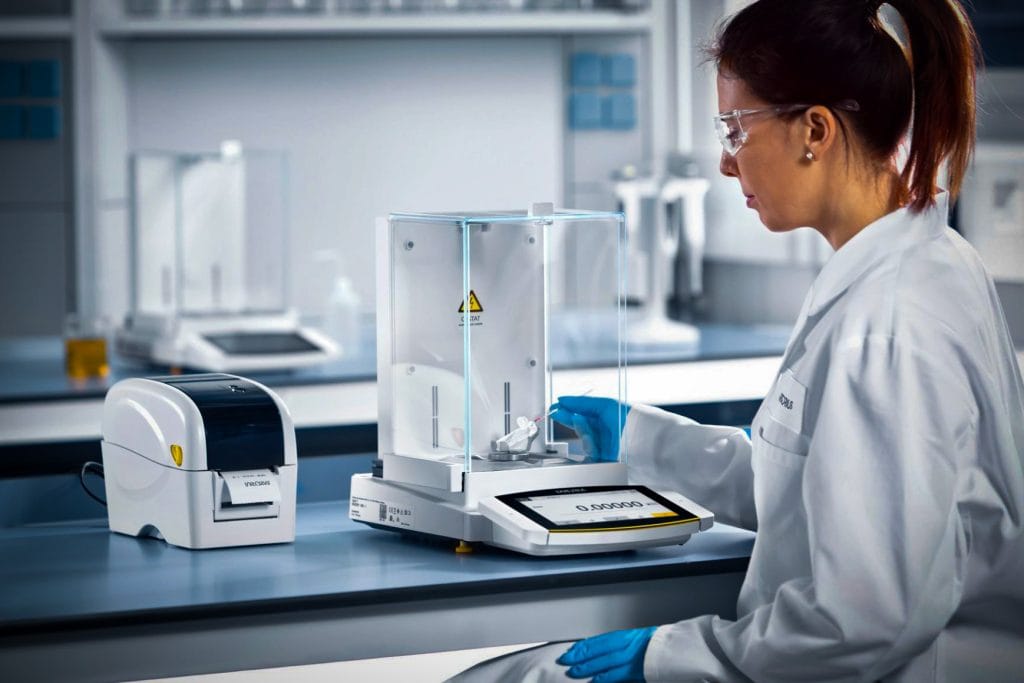
Precision balances are particularly common in the laboratory – for samples, chemicals, powders or reference materials in small quantities. Depending on the application, analytical balances, microbalances or ultra-microbalances are used. Microbalances can achieve resolutions of up to 0.001 mg with a low maximum load.
The influences that come into play during precision weighing are particularly evident in the laboratory. Temperature, humidity, vibrations, electrostatic charge and draughts influence the measurement result. This is why many analytical balances have a draft shield, an internal adjustment function and defined calibration intervals. Anyone working in the milligram or microgram range is not just weighing material – they are controlling a complete measuring environment.
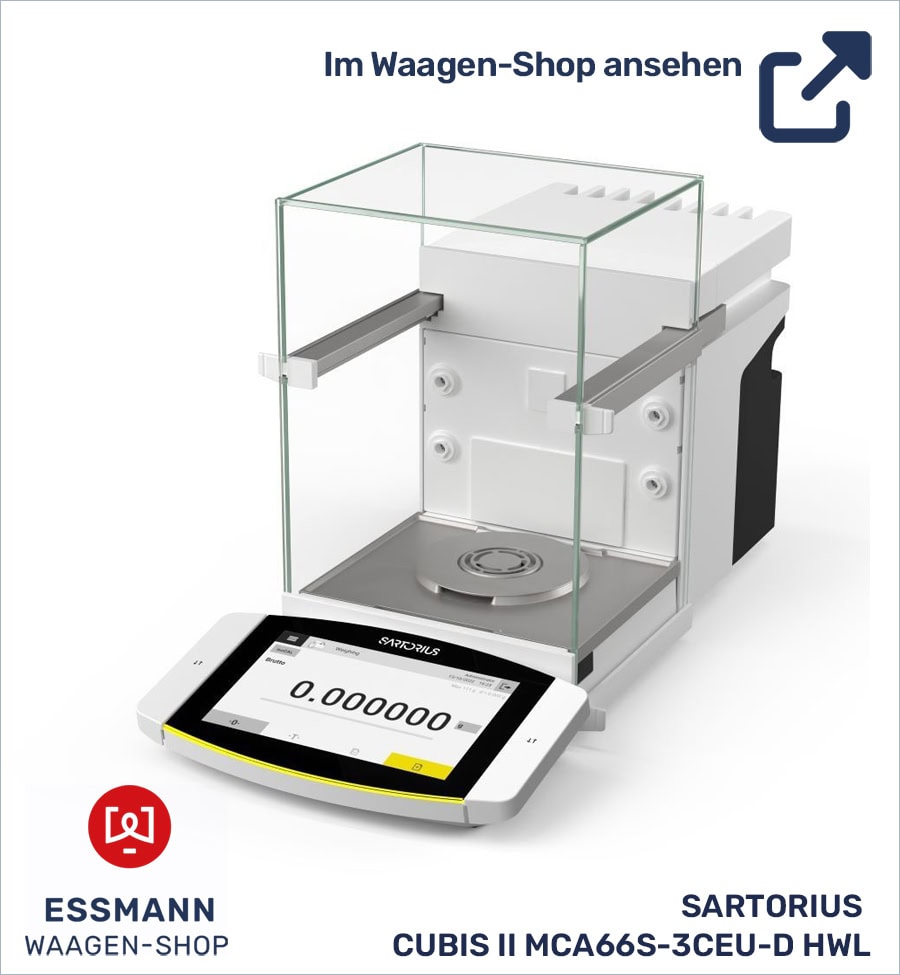
Developed for the most demanding laboratory applications.
Fine scales in pharmacies
In pharmacies, scales are required for formulations, defectives and analytical activities where small quantities of active ingredients or excipients need to be reliably dosed. EU Directive 2014/31/EU explicitly mentions the manufacture of medicinal products in pharmacies based on a doctor’s prescription and analyses in medical and pharmaceutical laboratories as regulated areas of use.
Pharmacies are subject to a clear verification obligation: The analytical and prescription scales used are non-automatic, self-adjusting fine and precision scales – the legal verification period is two years in accordance with Section 34 of the German Measurement and Verification Ordinance (MessEV). Choosing the wrong scale here rarely saves money. In most cases, you are just shifting the problem to auditing, recipe quality or the obligation to provide proof.
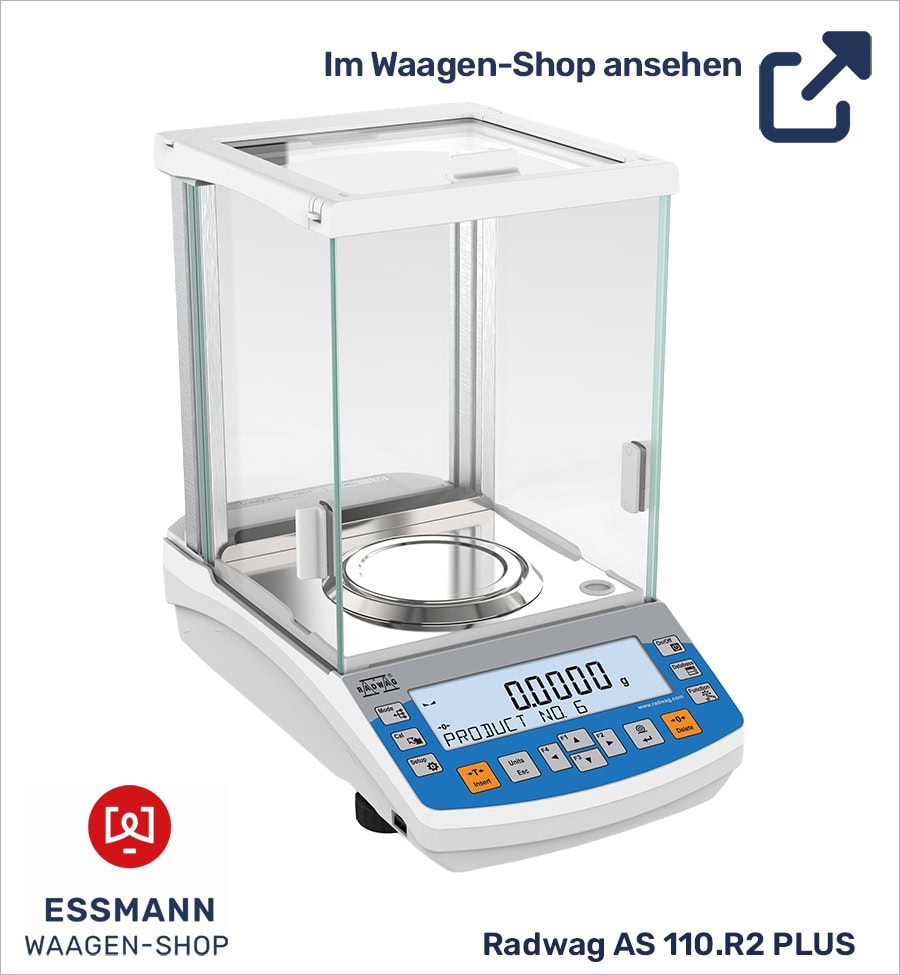
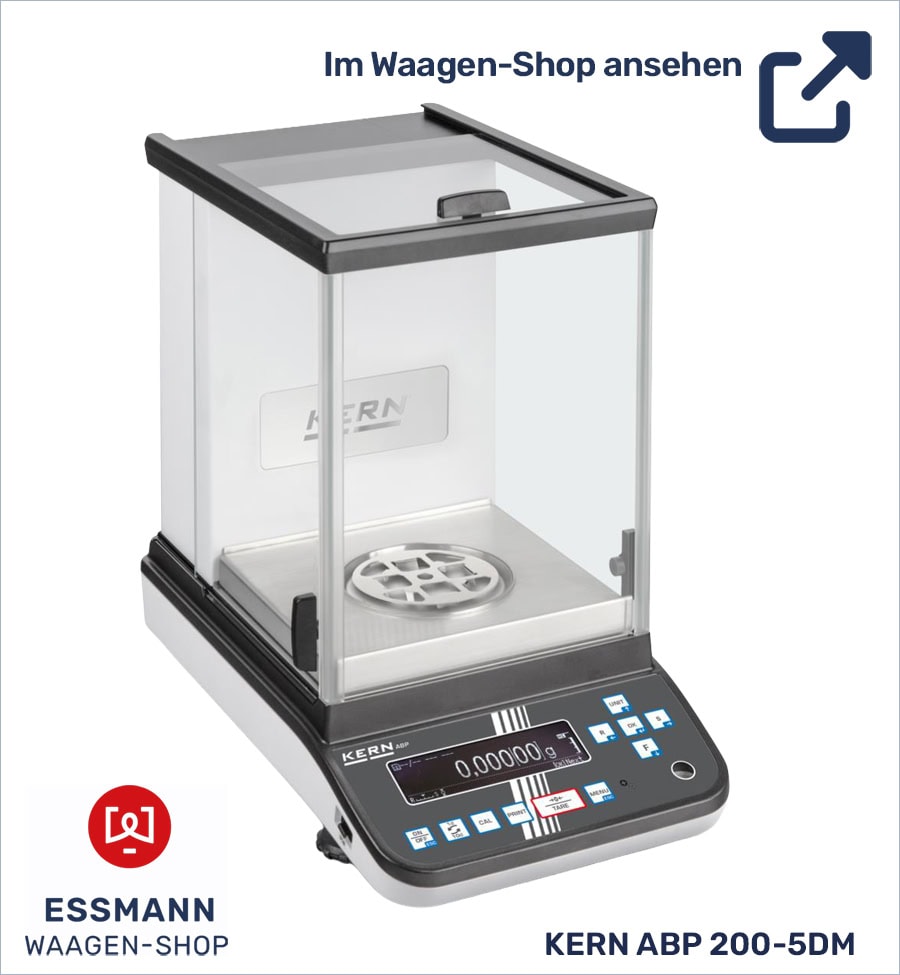
Fine scales in retail: gold, precious metals and gemstones
When trading in gold, precious metals, jewelry or gemstones, accurate weighing is directly relevant to value. EU Directive 2014/31/EU allows the troy ounce for precious metals and the metric carat for gemstones in addition to SI units.
If the scales are used for commercial purposes, legal-for-trade requirements apply. A “fine display” is then not enough – the scales must be approved for the specific purpose, correctly labeled and properly used.
You can find out more about buying gold scales in the following article.
Precision scales in quality assurance and production
In industrial quality assurance , precision scales are used for small parts, powders, granulates, additives or sample batches. The boundary between fine scales and precision scales is particularly relevant in practice: For some applications, a genuine class I precision scale is required, for others a high-quality class II precision scale is perfectly adequate. The right decision depends on the required measurement uncertainty, the criticality of the process and the documentation requirements. If you specify properly here, you will get stable processes. If you only order “the most accurate scale possible”, you will end up with a device – but not a solution.
Find out more about buying powder scales.
Buy fine and precision scales.
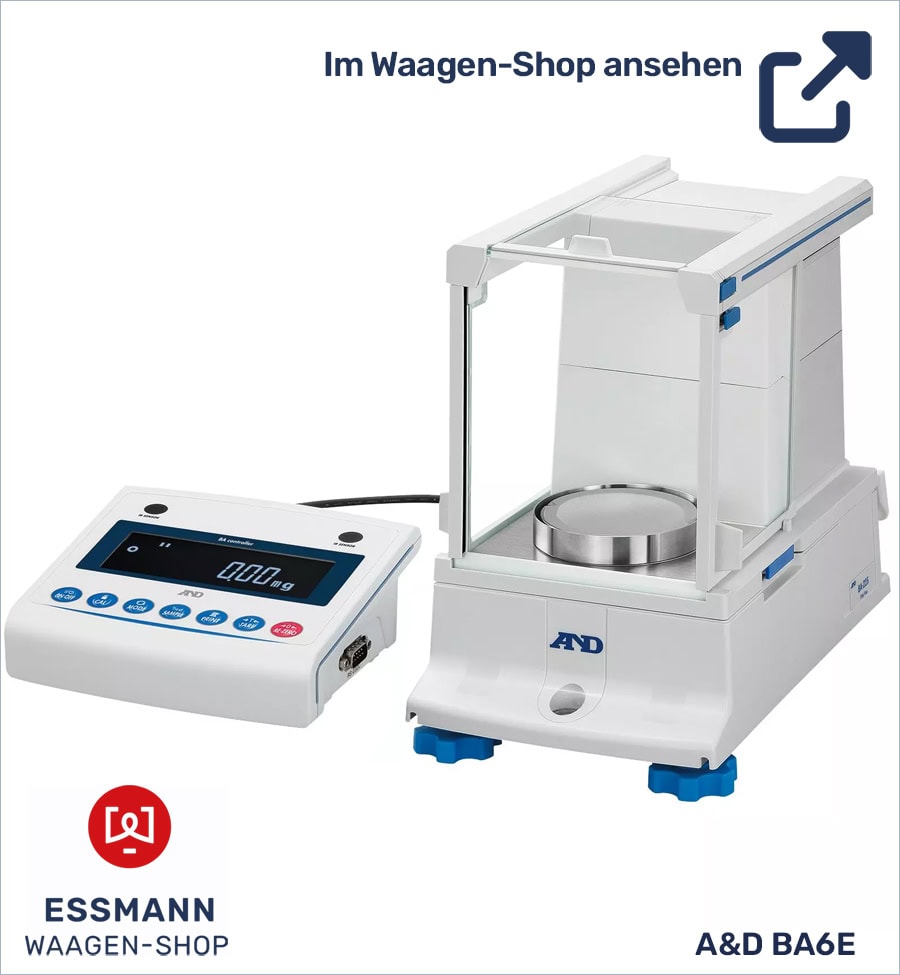
Precision scales in education, research and development
In schools, universities, research institutes and development departments, precision balances are used for chemical experiments, material testing or sample preparation. Not every balance has to be legal for trade. However, if measurement results are used in test reports, scientific work or regulatory verifications, the requirements for calibration, traceability and documentation increase. In such environments, a precision balance is often part of a measuring chain – test weights, ambient conditions, operator training and calibration intervals influence the result just as much as the device itself.
Buy scales for research and science
Precision scales that are not scales
Compact, battery-operated mini scales with hinged lids and displays in the range of 0.1 g to 0.001 g are routinely marketed as “precision scales”, especially outside of specialist shops – often for just a few euros, with names such as pocket scales, letter scales, jewelry scales or gold scales. In technical terms, the term “precision scales” is usually incorrect. Many of these devices lack reliable verification: They are often not legal for trade, not approved for commercial use and not traceably calibrated. An enclosed small “calibration weight” is in many cases not a certified test weight, but an accessory with an optimistic understanding of its purpose.
The problem with pocket scales and weighing critical substances
A cheap pocket scale sold as a “precision scale” can be sufficient for rough private orientation considerations. They are generally not suitable for legal, economic or health-related measurements – and this becomes particularly critical where people rely on the result.
With cannabis, the legal situation in Germany has been more differentiated since the Consumer Cannabis Act: certain possession quantities are permitted for adults under strict conditions; the law links these limits to grams. However, a private mini scale does not provide a legally reliable measurement. More importantly, the weight of a cannabis flower is not the dose of the active ingredient. According to BKA findings for 2024, the average THC content of cannabis flowers was 14.8 percent, and around 26 percent for cannabis resin. Such average values show one thing above all: the weight alone says little about the actual intake of the active ingredient.
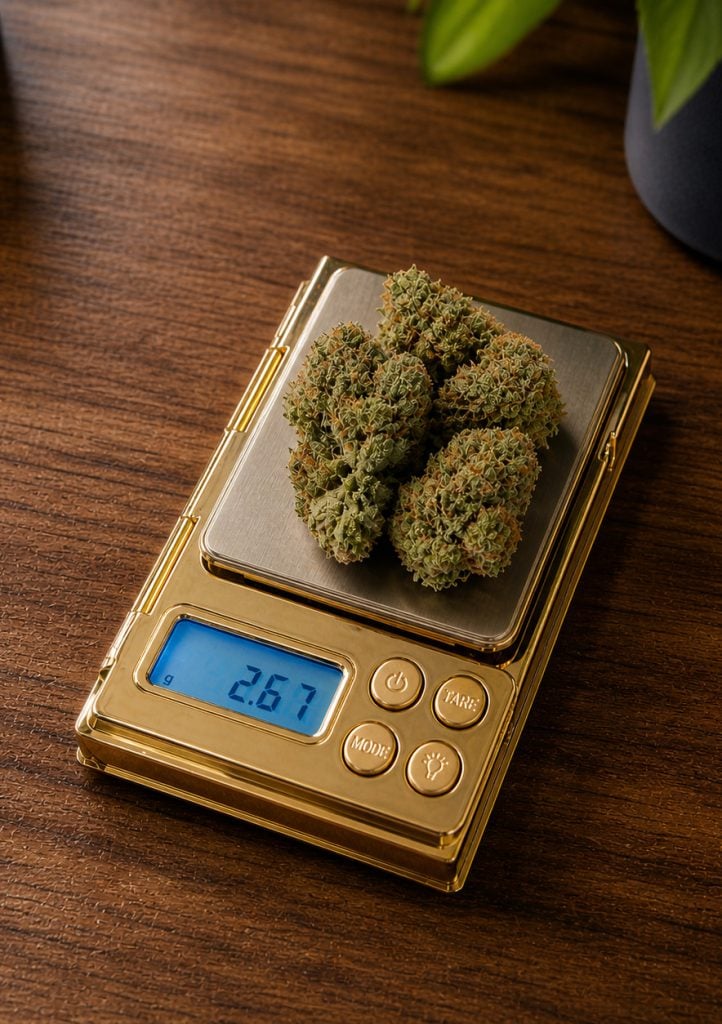
The problem is considerably worse with other narcotics. Substances from uncontrolled sources have neither known purity nor known active ingredient content. A scale only shows mass – it does not recognize whether a powder is diluted, contaminated or mixed with highly potent substances such as fentanyl, which can have a lethal effect even in the smallest quantities. Anyone who believes they can “dose correctly” with a cheap pocket scale is confusing an untested weight indicator with pharmaceutical control.
Illustration:
A fine scale is not automatically a fine scale.
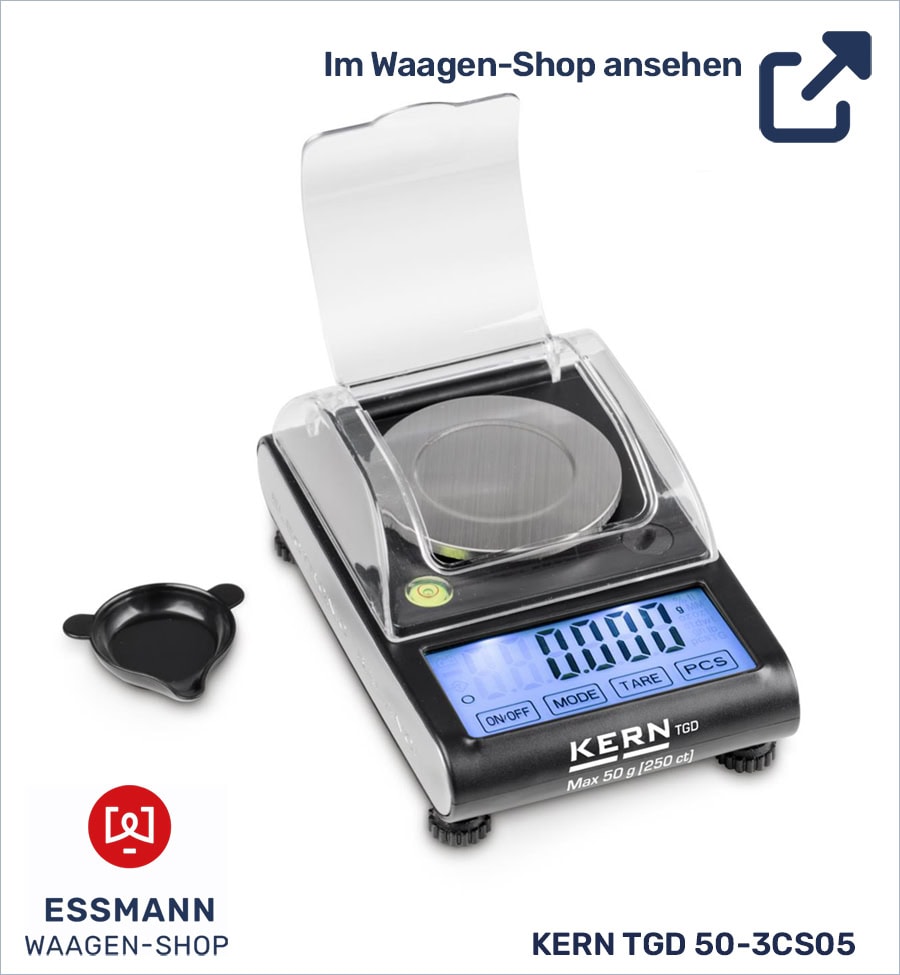
Why service is so important for precision scales
The more accurately a scale works, the more sensitive it is to external influences, wear, contamination, overloading or improper handling. Even an unsuitable location, a dirty weighing chamber or temperature fluctuations can influence the measurement result.
A experienced service partner therefore not only provides support when selecting the device, but also during installation, commissioning, maintenance, calibration, adjustment and documentation. During calibration, the extent to which the display deviates from the reference value is checked and documented; during adjustment, the balance is set within the permissible limits. DIN EN ISO/IEC 17025 is the relevant international standard for accredited calibrations.
In the case of legal-for-trade applications, there is a further point: verification is not a maintenance process, but a legally regulated procedure. According to § 34 MessEV, the regular calibration period for scales is two years. A good service partner does not wait to find out what has happened if the scale fails – they make sure that it does not do so in the first place.
In short: not all fine scales are the same
In the narrower technical sense, the term refers to a scale of accuracy class I. In broader market usage, it also includes laboratory scales, precision scales, gold scales or compact scales with a fine display.
Anyone selecting a precision scale should therefore choose according to more precise criteria than the term: The technical specification, the area of application, the legal requirements and long-term support are decisive. With small masses, it’s not just decimal places that count – it’s confidence in every single measurement result. Seek advice before selecting, calibrating or preparing for verification so that your precision scale remains exactly what it should be: a reliable measuring instrument for small masses and large responsibilities. And when buying, remember that you need a reliable scales workshop that knows your scales and can help you with verification or calibration, as well as maintenance and repairs.