Article from January 2026, updated on September 22, 2026
In the workshop of a gunsmith, ammunition dealer, hunter or sports shooter, the balance determines the exact dosage of the powder charges, whether for match ammunition, test series or customized loads. With long guns in particular, even small deviations in powder weight lead to inconsistent behavior. Weighing errors often start with the wrong purchase decision and lead to unwanted problems.
This article shows how the environment influences the measurement results, how to avoid errors and what is important when buying a powder scale.
1. legal framework: Who is allowed to reload?
Reloading in Germany
Reloading is not a hobby like model making, but the handling of explosive substances. Anyone wishing to buy, store and use propellant powder for cartridges requires a permit in accordance with § 27 SprengG. This requires specialist knowledge (training course with examination), reliability, personal suitability and a need. Without this permit, the manufacture of ammunition is prohibited.
Austria and Switzerland
In Austria and Switzerland, reloading is permitted for personal use, but the regulations on purchase, storage and documentation vary. Propellant powder is sold through gun dealers, usually in return for identification and proof. Commercial operations are also subject to occupational health and safety legislation, for example through risk assessments and storage concepts.
Important: This article does not replace legal advice. Only qualified persons may reload, and any loading must be based on the manufacturer’s data – never on gut feeling.
2. areas of application: Where powder scales are needed
Training in ammunition production in accordance with the Explosives Act
Expert trainers conduct recognized reloading courses in accordance with the Explosives Act for sports and hunting shooters, often in shooting lodges, hunting schools or specialized training centers and sometimes with mobile equipment. The participants acquire the specialist knowledge for the § 27 SprengG permit, practice on the presses and powder scales provided and work under the supervision of the course instructor.
Commercial reloaders and gunsmiths
Here, the focus is on match ammunition, hunting laboratories and test series. Traceability through batch documentation and test protocols is essential.
Special series with auto- or robotic tricklers
In laboratories for long-range or benchrest shooters, automated systems such as SuperTrickler, AutoTrickler or RoboTrickler (Open Source) the powder charges. The scale provides the reference signal while the system doses automatically.
In all cases, the scale is not an accessory, but a central measuring device. Errors have a direct effect on every calibration.
3 Needs & Pains: What moves users
Internal or external calibration?
Scales with internal adjustment (built-in test weight) offer convenience and reduce operating errors. External adjustment is less expensive and enables a clear test chain with certified weights.
Accessories and handling
The powder pan, material, filter settings and reaction speed of the scales influence whether reloading is smooth or frustrating. Professional scales drift only minimally and score points with short reaction times.
Availability and price stability
Many reloaders buy scales from non-specialist stores to save money. However, inexpensive models often fail, and where recommended scales are sold at significantly lower prices, long delivery times, a lack of service and even delivery failures are to be expected – or the store disappears altogether. If the scale is no longer repairable and available, this often affects the entire configuration, such as autotrickler profiles.
B2B procurement
Professional procurement requires proven, reliable products, stable delivery routes and defined services such as maintenance, calibration and repair in your own country. If you buy from exotic low-cost stores, you forgo this or have to look for a service partner nearby first.
4. resolution: 0.001 g corresponds to 0.015 gn
For precise reloading, scales with 0.001 g readability have proven their worth. A&D models in particular, such as the A&D FX-120i or A&D FX-300i are widely used with this resolution, often in combination with automated tricklers.
Advantages:
- Resolution: 0.001 gram corresponds to a rounded 0.015 grain – ideal for rifle calibrations.
- Stability: Temperature-compensated laboratory balances provide reproducible values.
- Interfaces: RS-232 or USB enable the connection for controlling the autotrickler and data logger for documentation.
Important: High resolution is no substitute for a clean measuring chain. Without a stable environment and correct adjustment, even the best scales will drift.
5 Mechanical or electronic? A comparison
Mechanical beam scales
- Advantages: Robust, independent of electricity and insensitive to electromagnetic interference.
- Disadvantages: Slow, operator-dependent, no interfaces for automation.
Digital precision scales
- Advantages: Fast, precise, easy to document, compatible with autotricklers.
- Disadvantages: Sensitive to draughts, vibrations and electromagnetic interference.
6. adjustment and calibration
Internal adjustment
Scales with built-in test weight adjust themselves at the touch of a button. This minimizes operating errors and makes routine tests easier.
External adjustment
External test weights are cheaper and enable a clear test chain. Regular tests should be documented.
The terms clearly distinguished:
- Calibration adjusts the scale so that it displays the correct reading again. A calibration weight is used for this purpose. The process alters the scale but does not record anything.
- Calibration compares the display with a traceable standard and documents the deviation. A test weight is used for this purpose. The process does not alter anything; it simply determines the deviation.
- Traceability: Certified weights, such as those in Class F1, are required for audits or certifications. Anyone who needs to document their calibration results requires a calibration report—not just a calibration performed at the push of a button.
7. requirements for automated tricklers
Automated systems expect the scales to do this:
- Stable measured values: 0.001 g resolution is standard.
- Serial interface: RS-232 for communication with the trickler.
- Drift behavior: Scales must be allowed to warm up before use (30 to 60 minutes).
In practice, this means that laboratory balances with documented interfaces are the safe choice. Models without stable firmware or without a disclosed interface protocol pose a risk because any firmware change can disrupt the trickle charger setup.
User test: The A&D FX 120i in a trickle comparison with a G&G scale
8. interference factors: explosion protection, static charging and EMC
Explosion protection (ATEX)
In small ammunition workshops, a potentially explosive area is rare. Explosion-proof scales are usually only required in industrial plants.
Static charge
Static charge interferes with electronic scales. Metal powder pans, antistatic brushes and moderate humidity help to prevent it.
Electromagnetic interference
Mobile phones, WLAN routers and power supply units can affect digital scales. Keep these devices away from the weighing area.
Shocks
Hitting the table leg during weighing can distort the result. Sturdy weighing tables with stone plates that provide stability are helpful here.
9. proven brands and models that are suitable as powder scales
The proven A&D FX-i and FZ-i series
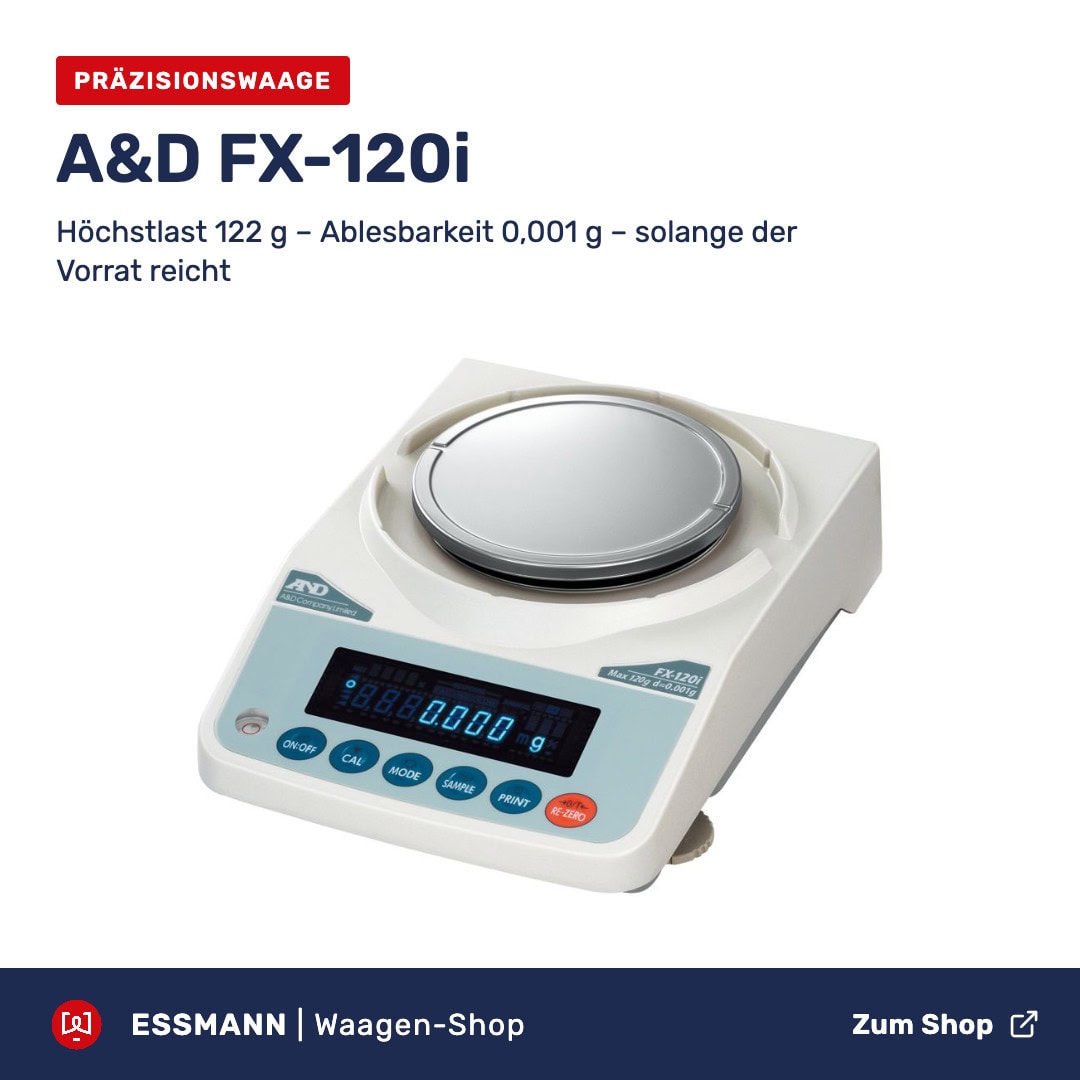
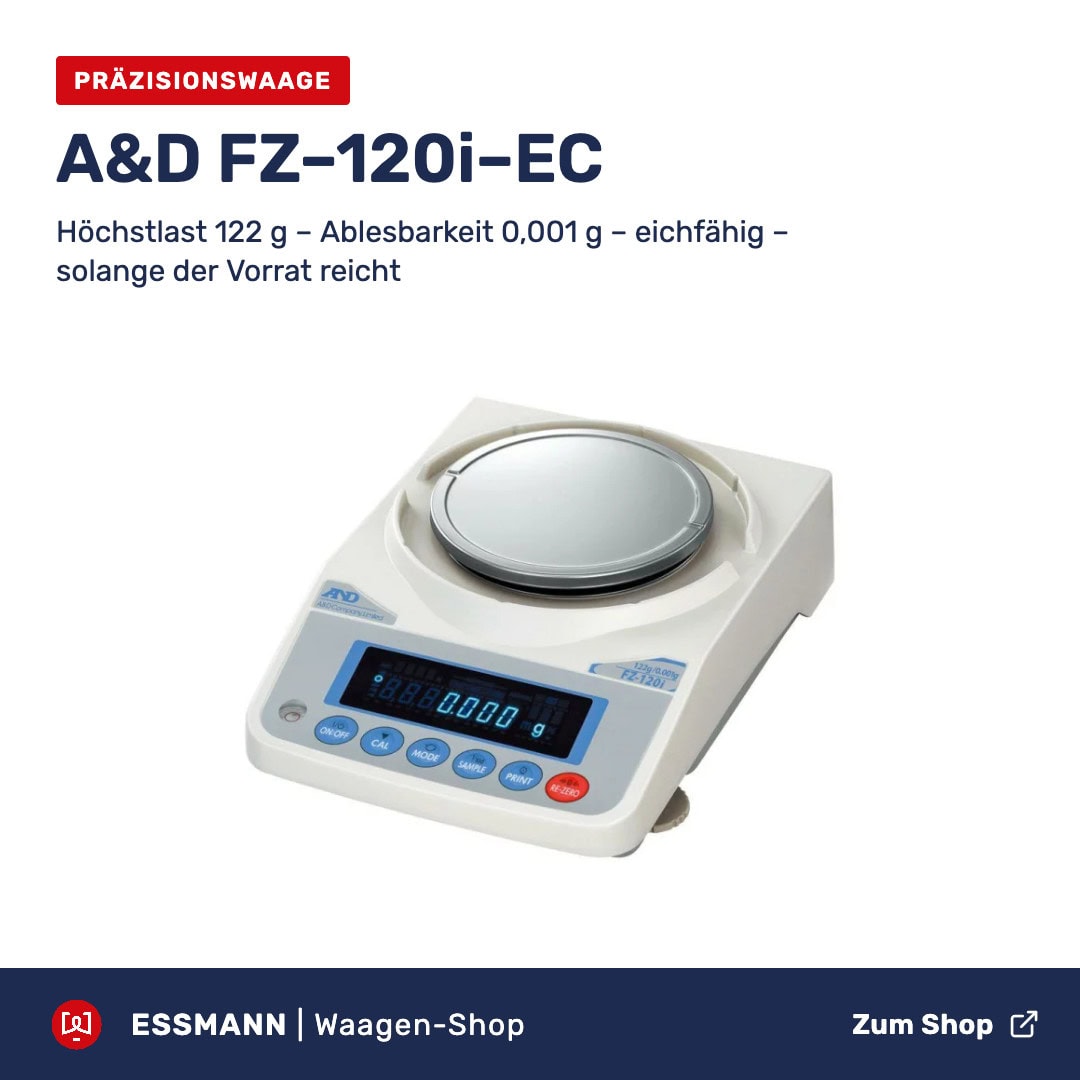
The FX-i series (external calibration) and the FZ-i series (internal calibration) offer 0.001 g readability, stable RS-232 interfaces, and come with Auto and Robo-Tricklers Compatible. The unit of measurement “grain” (gn) is available as the default unit.
Anyone who uses a scale for business purposes —such as when selling by weight—needs a calibrated scale. The models in the FZ series are suitable for calibration, and we offer them to you as FZ-120i-EC, factory-calibrated can be supplied. One point that is often overlooked: A calibrated scale may only display legal units, and grain is not one of them. For the reloading bench, therefore, the uncalibrated version is the right choice—such as the FX-120i. If you need both—grain at the press and calibrated weighing at the point of sale—it’s better to use two devices than to settle for a compromise.
Update September 2026: A&D is replacing the FX-i/FZ-i with the Fortis series
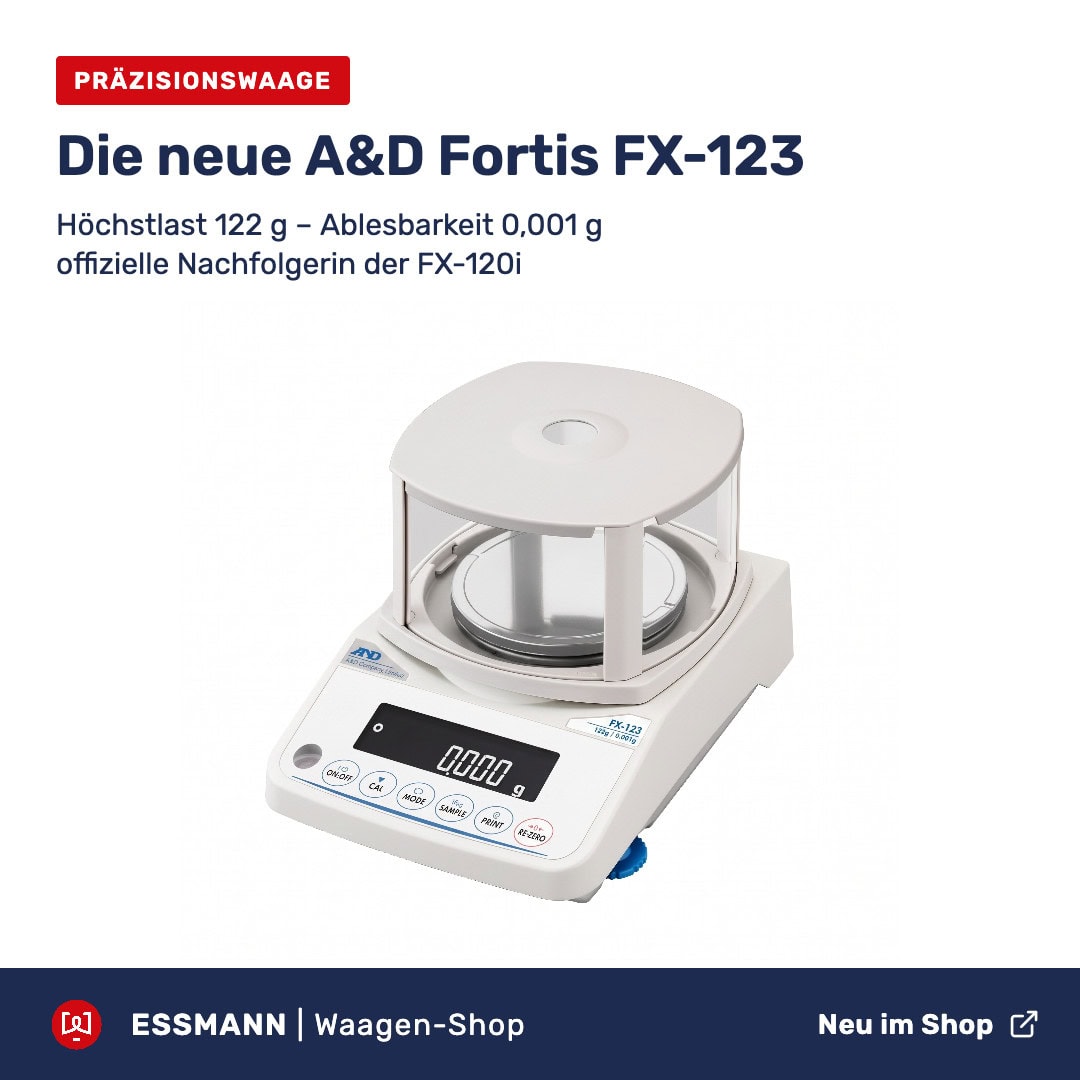
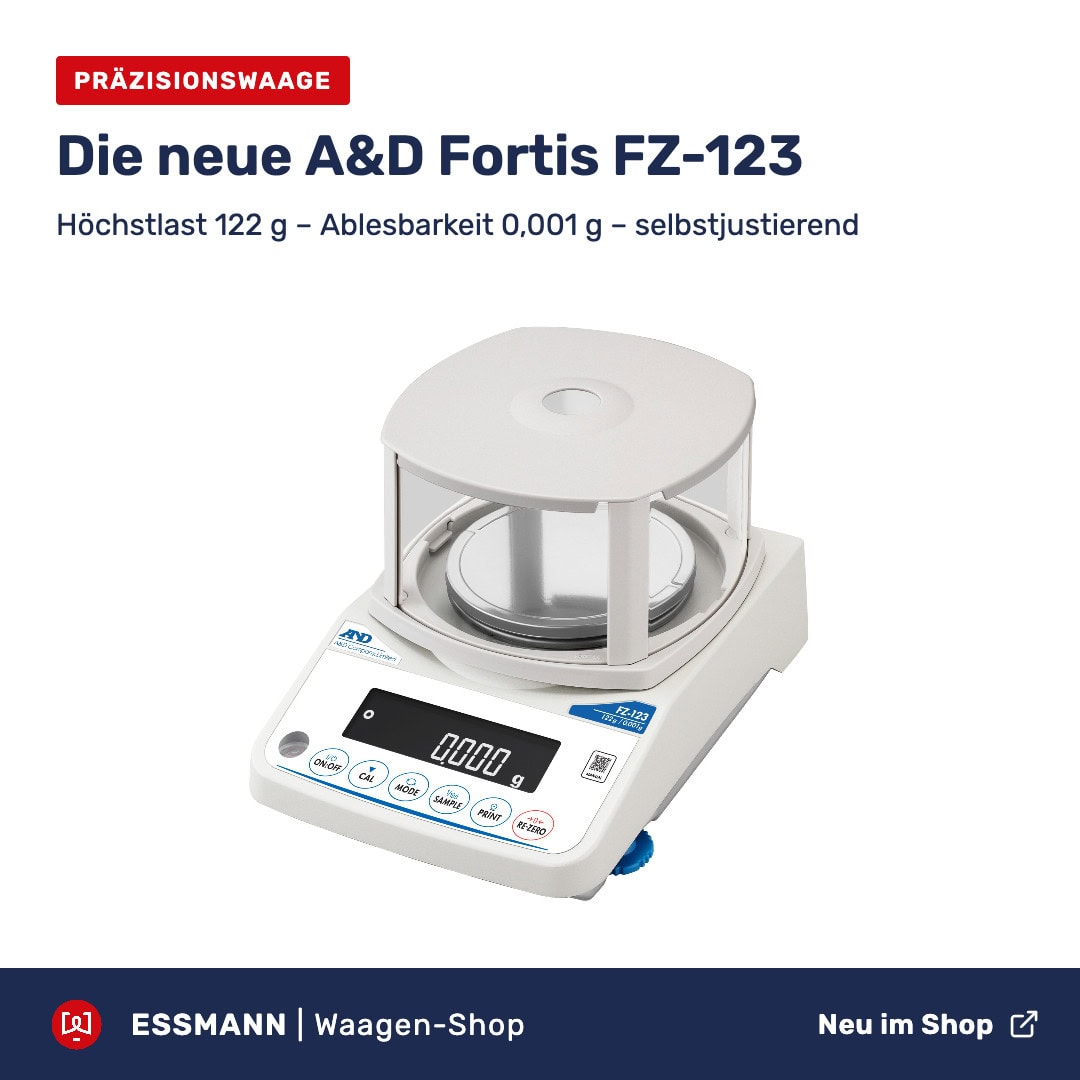
The FX-120i, which has been standard equipment on reloading benches for years, is getting a successor: With the Fortis series, A&D is phasing out the entire FX/FZ line; the previous models are being cleared out.
Its direct successors are the FX-123 (122 g) and FX-323 (320 g) with external calibration, as well as the FZ-123 with an internal calibration weight. Crucial for your compounding: the sensor, readability, and speed remain the same. Fortis uses the same Compact Super Hybrid Sensor, continues to weigh with an accuracy of 0.001 g (approximately 0.015 grains), stabilizes in about one second, and displays grains as the default unit. The RS-232C interface, used to connect auto-batchers and data loggers, remains standard, and USB is included as standard equipment.
The FX-123 in action: FX-123 User Video
New features include shock detection, which alerts the user to and logs hard impacts on the load cell; a backlit LCD; and a specified minimum weighing capacity of 1.4 g in accordance with USP Chapter 41.
There are two points you should discuss with us before placing your order:
1. One thing to keep in mind during planning: USB, Ethernet, Bluetooth, and the internal battery are alternative options, and only one of them can be installed. The RS-232C interface is not affected by this and is included as standard, so the connection for trickle chargers and data loggers is available in every configuration. You must specify your preferred interface at the time of purchase. A&D also offers external interface adapters that connect via RS-232C.
2. Regarding the calibrated version: According to the manufacturer, the Fortis FZ series is approved and will be available starting in November 2026, with some models available earlier. The model designation for the scales eligible for calibration changes from -EC to -LFT for “Legal For Trade”; the FZ-120i-EC will therefore be replaced by the FZ-123-LFT . These devices undergo a two-stage conformity assessment; we will handle the second stage for you on-site. Until the new model is available, we will continue to ship the FZ-i-EC from our current inventory. This does not affect the reloading bench itself; for that, the non-calibrated version is the right choice, as it is the only one that weighs in grains.
Other suitable precision scales
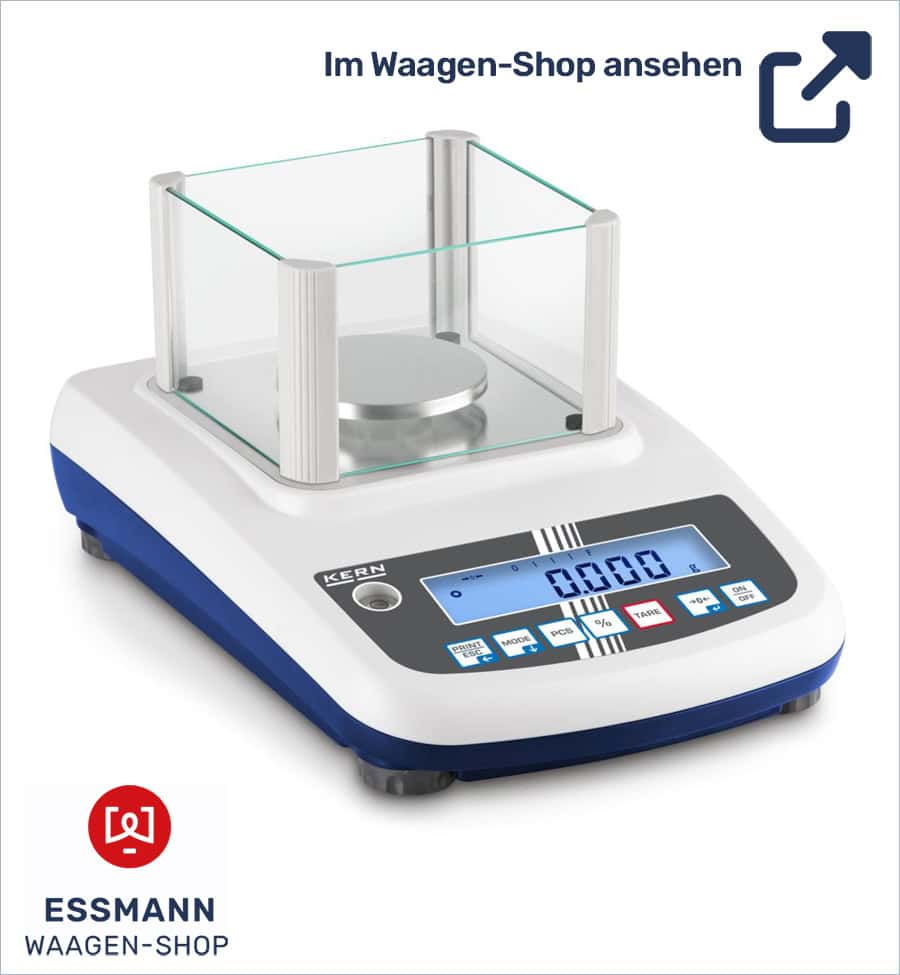
KERN PFB 120-3
The KERN PFB 120-3 precision balance is ideal for manual trickling and QA checkweighing, but can also be used as a balance for the automated trickle process. Grain (gn) is also a standard unit here.
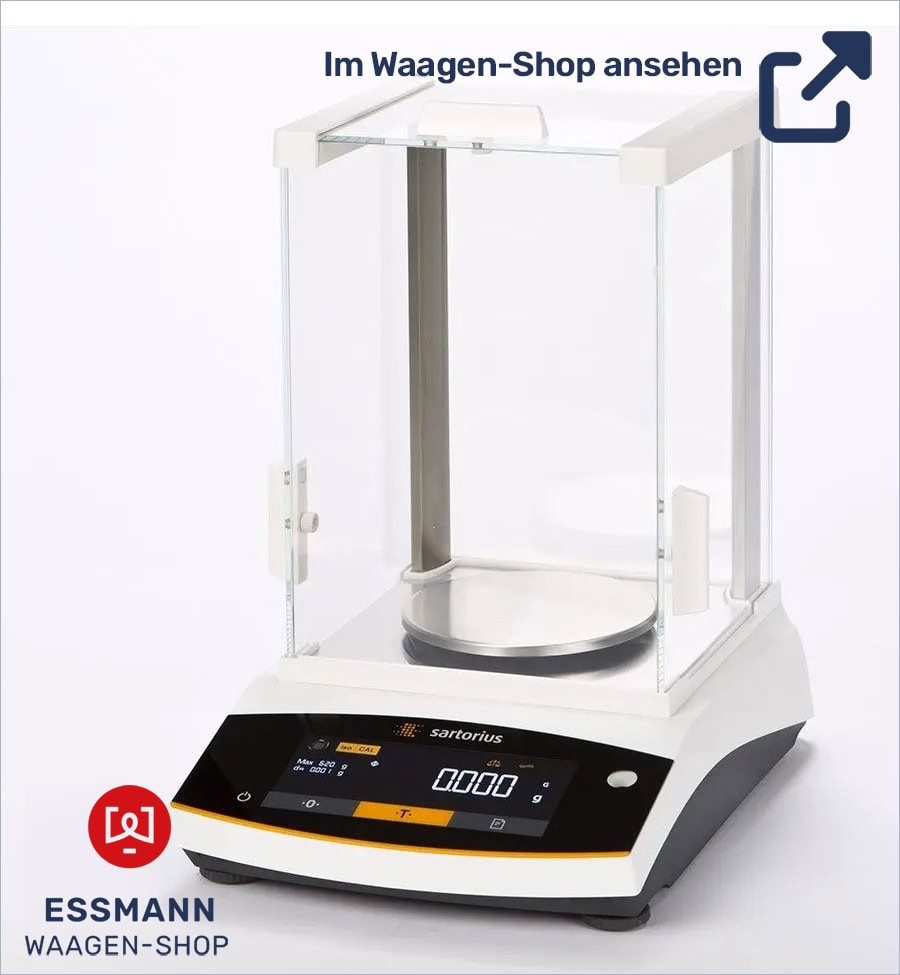
Sartorius Entris II series
The high-class, elegant Entris II precision balance from Sartorius, known for its quality and precision, is undoubtedly something for connoisseurs. Equipped with proven interfaces, a modern touchscreen and internal test weight, it is also compatible with autotricklers and can also supply data to an ERP. Of course, it can weigh in the unit of measurement grain.
More precision scales in the ESSMANN Scales Shop
Conclusion: The choice of scales depends on precision, interfaces, robustness and price. Models from A&D, Kern and Sartorius meet the requirements for use in reloading and can display all grains (gn) as a unit of measurement. The decisive factor is that the scale works reliably and can be integrated into the existing infrastructure.
10. why ESSMANN is a good partner for reloaders
ESSMANN is a Scale construction companywhich has been developing, building and using scales in industry, trade and laboratories since 1860. Today, ESSMANN covers the entire spectrum from ultra-microbalances to rail scales and, according to independent analyses, is one of the fastest-growing medium-sized companies in Germany. The fast and experienced Service covers maintenance, adjustment, calibration, verification and repair and supports you in all matters relating to weighing technology.
For you as a shooting club, reloading company or gunsmith, this means in concrete terms:
- Technical advice instead of carton logistics
We know the typical reloader setups, from simple precision scales with manual trickling to autotrickler integration with A&D laboratory scales, and support you in the selection, interface and integration into your process. - Think measurement chain from a single source
Scales, test weights, environment, documentation and service are planned as a system. A random series of individual purchases from the cheapest store harbors risks in terms of reliability and precision. - Long-term availability and service points
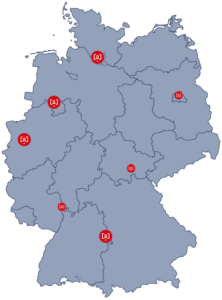
With locations and service centers throughout Germany, ESSMANN is a full-service provider for maintenance, calibration and repair. - B2B processes that suit you
Offers, delivery conditions and services are designed for industry, trade, public institutions and associations – including appropriate documentation for audits and internal approvals.
If your ammunition workshop or company is involved in producing special series with auto-tricklers or high-precision laboratory work as a team, the scales are the heart of your measuring chain, and this is exactly where an experienced scale manufacturer pays off as a partner. Let us check together which scales, which accessories and which service modules will set up your reloading workshop so that you benefit from reliability and consistency.

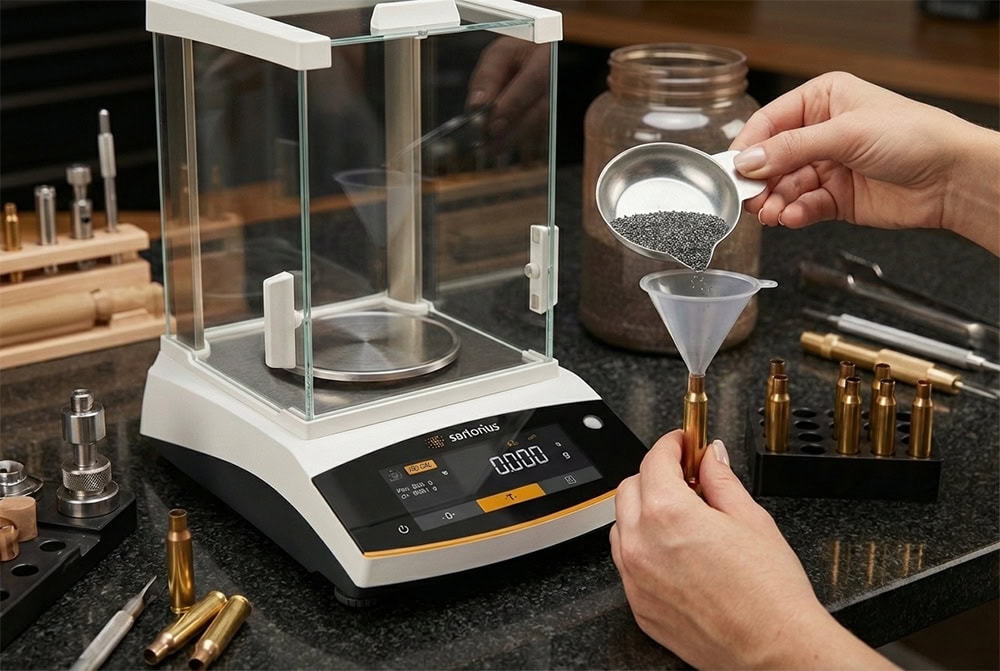
The image was created with AI support and is a symbol image.