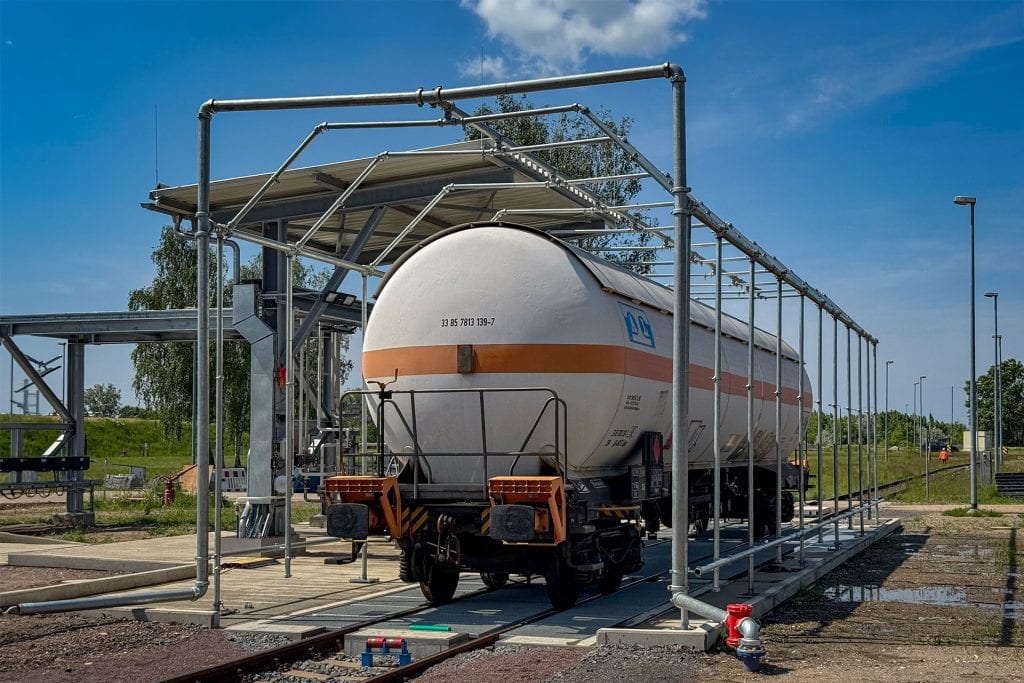
Even a few hundred kilograms of excess liquefied gas in a tank car poses a safety risk. The quality of a loading facility becomes apparent when a failure occurs: the moment a load cell fails or a cable breaks. At the Böhlen site of DOW Olefinverbund GmbH, every tank car rolling in for liquid gas loading via rail is weighed at four loading points on static ESSMANN HE-SRS rail scales —each equipped with a filling scale for dosing and a calibratable checkweigher that provide mutual backup. The system was installed during ongoing operations, in a potentially explosive atmosphere, above a spill containment tray for highly water-polluting substances. In this use case, you’ll learn what this means in practice, why it’s relevant for every gas loading operator, and what structural requirements come into play.
The starting point: LPG, rail, chemical industry site
In Böhlen, DOW operates the centerpiece of its Central German olefins complex: the steam cracker, which converts naphtha into the basic chemical feedstocks ethylene and propylene. Some of these products are processed on-site, while others are distributed to other locations via a group-wide pipeline and logistics network. In Böhlen, approximately 80 rail cars are handled daily, a significant portion of which are used for loading and unloading liquefied gases. The impetus for the project came from water regulations: To meet the requirements of the Ordinance on Facilities for Handling Substances Hazardous to Water (AwSV), the tank car loading and unloading area was converted at a central loading track and upgraded for the loading of substances hazardous to water.
When loading liquefied gases onto tank cars, three requirements come into play, each of which is challenging in its own right. The fill volume must be measured precisely and in a manner that meets calibration standards, as it forms the basis for commercial, tax, and volume accounting. Overfilling must be technically ruled out, as it poses an immediate safety risk with liquefied gases. And the entire process takes place in a potentially explosive atmosphere, where protection of the soil and groundwater must also be ensured. The facility in Böhlen fully meets this set of requirements.
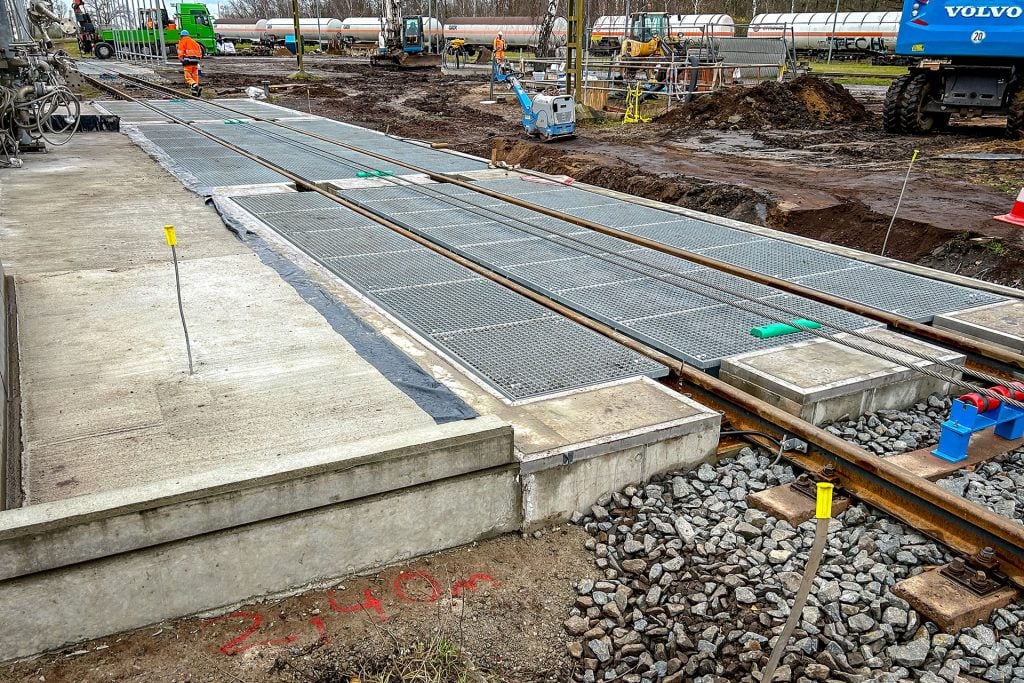
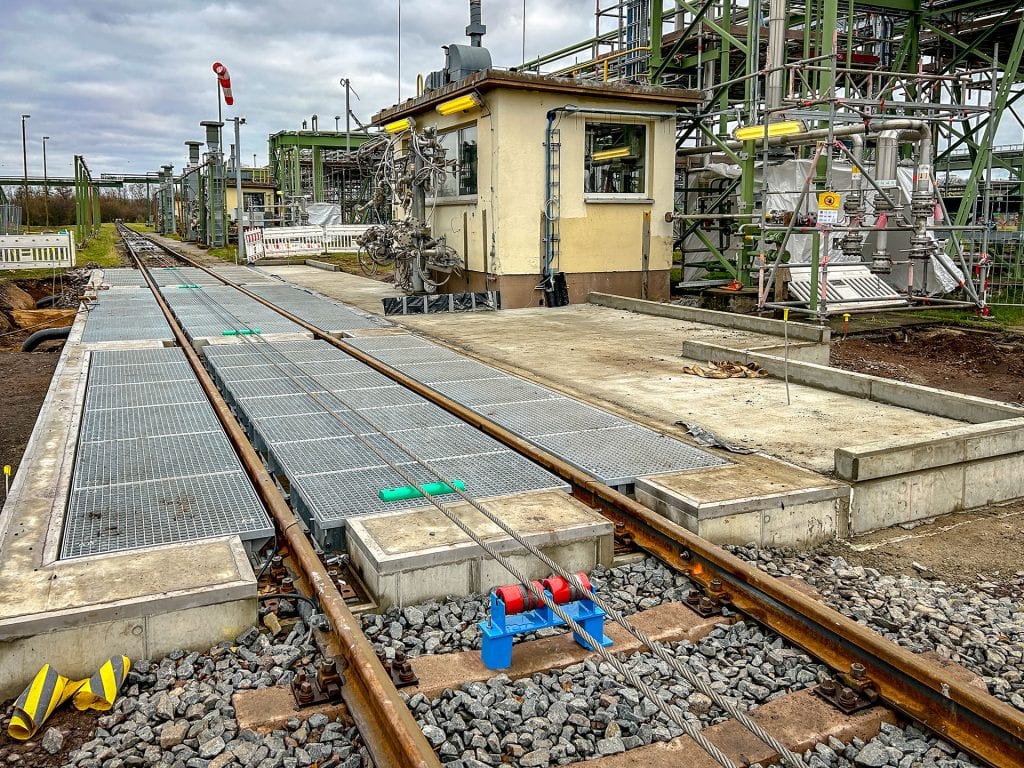
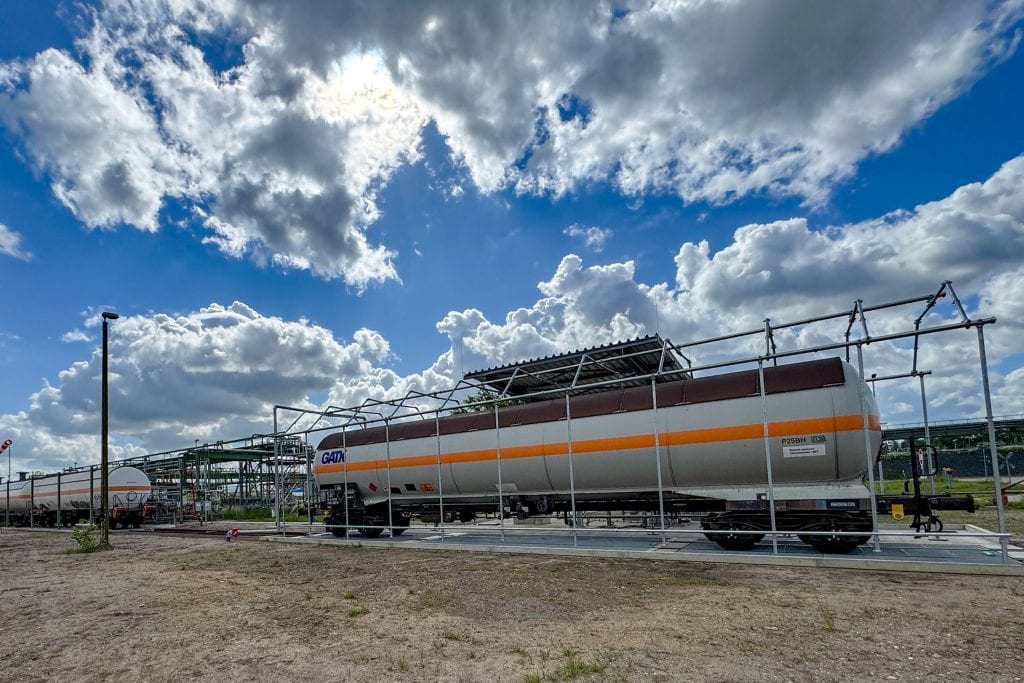
Each loading station is equipped with two static scales with clearly defined functions, as well as a reinforced concrete spill containment basin in compliance with water regulations. The tank car remains stationary while being filled and continuously weighed. This system is designed for the controlled, setpoint-driven filling of individual cars—where accuracy and safety take precedence over pure throughput during each loading operation.
Two scales, two tasks: the real safety issue
At the heart of the system is the interaction of two scales at each loading point. When filling gas tank cars, the international rail regulations for dangerous goods (RID) require that overfilling be reliably prevented and that the fill volume be verified using calibrated measuring equipment, such as weighing on a calibrated scale. Any overfilling must be immediately and safely corrected. The regulation specifies what must be ensured. How this is reliably achieved from a plant engineering perspective is a matter of engineering—and this is where the ESSMANN concept with the HE-SRS track scales comes into play.
Both scales perform different functions and serve as backups for each other:
- Filling Scale – Dosing Control: controls the filling process, reports incremental weight thresholds to the control system, and automatically shuts off when 90 percent of the target weight is reached. The fill quantity remains visible on-site, while input is restricted to the control system—this prevents operating errors in the process.
- Checkweigher – Calibratable weighing: provides calibrated weight measurements that are legally valid for commercial transactions and quantity determination, and records them in an audit-proof manner in the alibi memory.
- Overfill protection: A dry contact for the overfill alarm is permanently installed. If the fill level reaches critical values, the system shuts down before a dangerous overfill occurs.
The practical benefit is the most important factor: dosing is handled by one scale, while legally compliant quantity determination is handled by the other—and both values can be cross-checked. A single-channel solution would have to perform both tasks with a single measurement and would offer no second line of defense in the event of an error. The separate design detects deviations and stops the process before a technical defect turns into a loss event.
The weighing system is designed for harsh outdoor conditions: a weighing range of 0 to 100 tons, a resolution of 0.02 tons, an accuracy of ≤ ±0.05 percent of the final value, and an overload capacity of 200 percent. Lightning and surge protection are integrated, and the outdoor protection rating is IP68/IP69K. This ensures the system remains reliable even during continuous rain, frost down to -27 °C, and high-pressure cleaning—the weighing terminals themselves are housed in the adjacent weighing stations outside the hazardous area.
Water Protection: Impermeable Substrate Under Water Law
The loading of liquefied gases—some of which pose a significant risk to water bodies—is as much a matter of water protection as it is a matter of volume. Spill containment basins and weighing pits were therefore constructed as precast reinforced concrete elements with building authority approval (DIBt), with proof of watertightness in accordance with the DAfStB guideline “Concrete Construction for Handling Water-Hazardous Substances.” The design is engineered to limit crack width to ≤ 0.1 mm, with a slope for drainage and perimeter edge protection. All penetrations and openings are provided with a certified leak-tightness certificate for the highest water hazard class considered.
The concept behind this is well thought out: The weighbridge pit serves as an emergency containment system, designed to temporarily contain leaks. In an emergency, the entire pit can be flooded while the soil and groundwater remain protected—the collected medium is routed via a collection line to a containment basin. For the operator, this means: The system meets the requirements of water law regarding containment and leak-tightness from the outset and can be verified by regulatory authorities.
Zone 1: Equipment that must be suitable for use in potentially explosive atmospheres
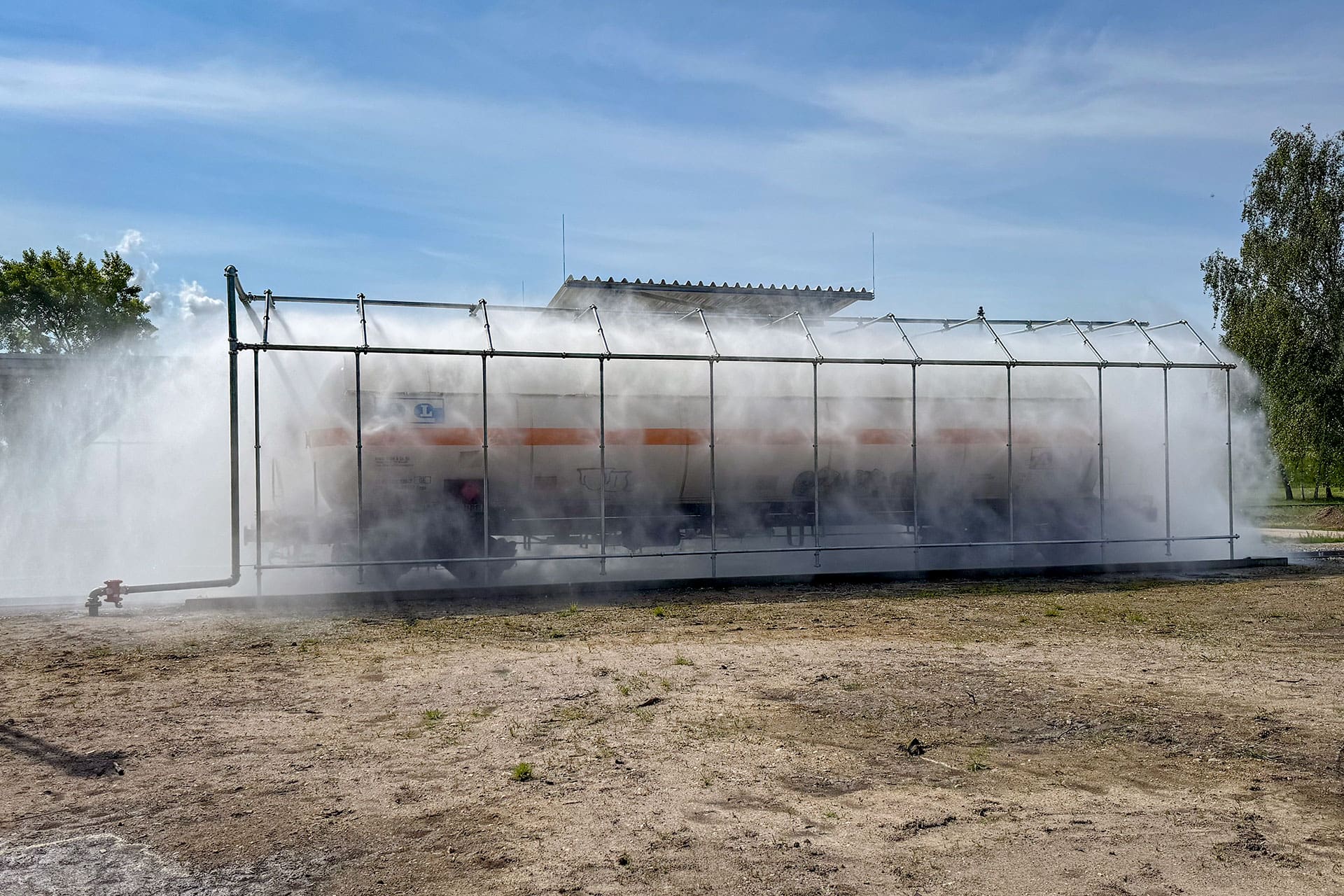
Where liquefied gases are handled, a potentially explosive atmosphere is created. The DOW plant is located in Ex Zone 1, classified as IIA T2; all components in the hazardous area are ATEX-certified. There are solid reasons for this: In Zone 1, a hazardous explosive atmosphere can occasionally be expected during normal operation. Components installed here must be approved for this purpose and marked accordingly.
The design clearly separates the systems according to hazard classification: The load cells, including terminal boxes and equipotential bonding, are designed for Zone 1 and are located directly at the loading point, while the weighing terminals are housed in the adjacent weighing stations in the non-hazardous area. This keeps the sensitive control and evaluation equipment out of the hazardous atmosphere, while only approved equipment operates in the field. This approval is the prerequisite for use in such a loading system.
The real challenge: renovating while keeping operations running
Shutting down a rail loading facility costs a chemical plant money, every single day. In Böhlen, the situation was further complicated by the fact that three of the four existing loading points were being upgraded and one was being built from scratch—right in the middle of ongoing operations at a liquefied gas storage facility in Ex-Zone 1. Interventions in existing, operational systems had to be announced in advance and kept to a minimum.
ESSMANN relies on precast reinforced concrete elements for this project: pits and bridges are delivered to the construction site as prefabricated units and installed on-site. This significantly reduces disruption to rail operations, as it eliminates the need for formwork, pouring, and curing of in-situ concrete. Installation proceeded in staggered phases, ensuring that only individual loading points were out of service at any given time, while the rest remained available. Once the mechanical work was complete, the passability of each station was ensured, even though calibration and commissioning of the individual stations followed at a later date.
For the operator, this means a predictable, phased renovation while loading operations continue. Anyone who has ever renovated a loading track system during ongoing operations knows the level of coordination required—and the value of getting it right.
.
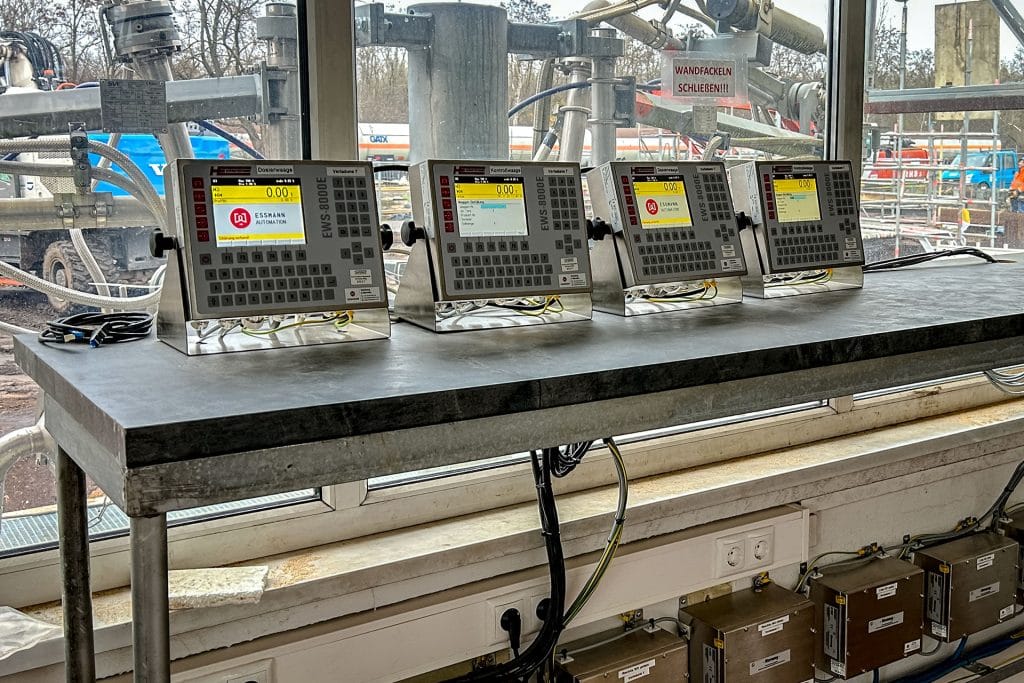
EWS weighing and control units monitor and regulate processes directly on site.
Everything from a single source
ESSMANN handled the entire planning, design, and production supervision for DOW, as well as delivery, installation, commissioning, and calibration using its own staff. This offers a tangible benefit: For a system that must simultaneously comply with hazardous materials regulations, water protection, explosion protection, and calibration laws, every interface between different trades shifts responsibility to where no one wants it. Having a single point of responsibility from planning through calibration keeps this chain intact.
What this means for your business
Weighing during a gas loading operation is a safety system that goes beyond simply determining the quantity. Here are three points that can be applied to other loading operations:
- Keep dosing and calibration weighing separate. A filling scale for process control and a calibratable checkweigher for quantity determination provide you with two values that can be cross-checked, along with an automatic shutdown before the situation becomes critical.
- Consider water law and environmental impact from the very beginning. Retrofitting a scale with water protection in accordance with AwSV and explosion protection is more expensive and rarely as effective as a design that includes DIBt approval and a leak-tightness certificate from the outset.
- Renovations during normal operations are a matter of planning. Precast concrete components and a staggered installation schedule allow for partial continued operation during loading, rather than a complete shutdown—a factor that should be included in the bid comparison.
If you fill tank cars or bulk cars at your facility in a controlled manner and have to comply with regulations regarding hazardous materials, water protection, or explosion safety, it’s worth discussing a system that addresses all these requirements in a single solution —just as the four loading stations in Böhlen have been doing every day since they went into operation. ESSMANN | Scales & Automation would be happy to advise you on this.